By Cassandra Balentine
Part 1 of 4
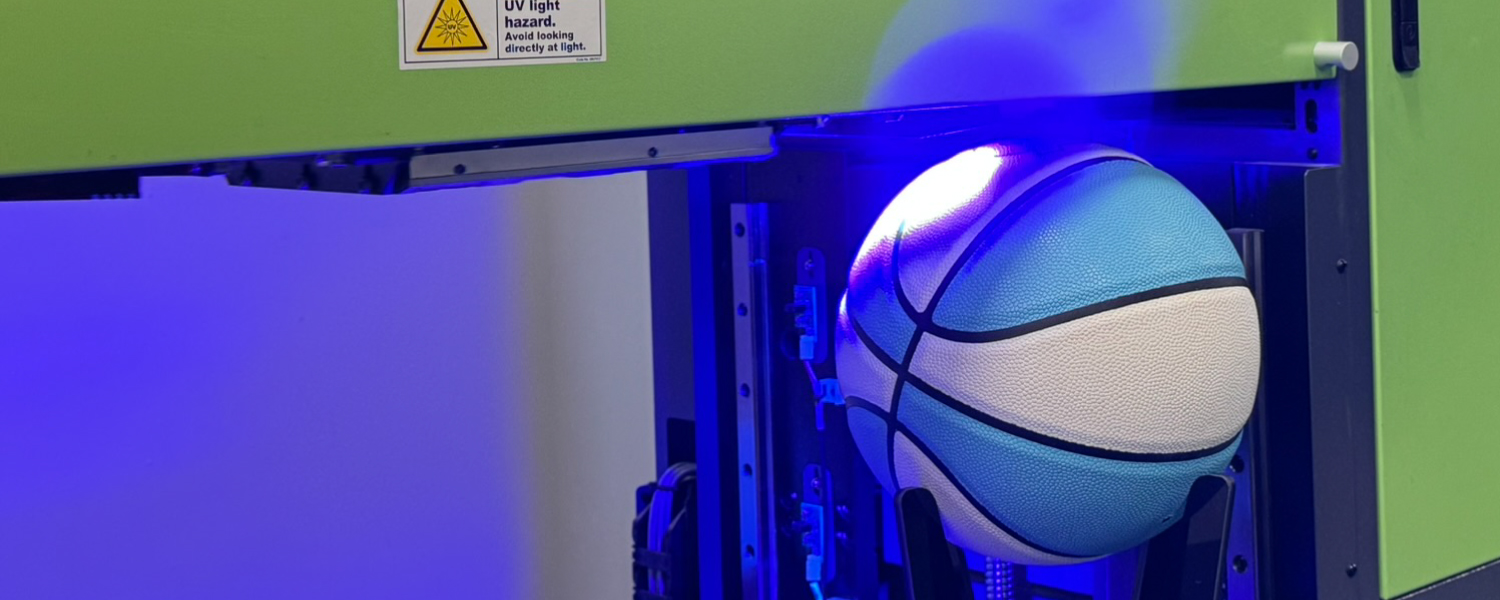
Continued technology advancements enable direct to object (DTO) printing on a variety of products, including curved and other unique shapes and surfaces.
Continued Innovations
Printhead advancements have a direct impact on printing complex objects with consistent quality.
Industrial piezoelectric drop-on-demand printheads feature improvements in nozzle density, droplet control, waveform technology, reliability, and the ability to precisely control ink deposition, shares Tumi Mosiah, product marketing manager, Boston Industrial Solutions, Inc.
For example, high-performance printheads deliver precise droplet control, high native resolution, and reliable jetting at greater throw distances, making them ideal for decorating complex geometries. “When used for high-gap printing, they enable manufacturers to maintain sharp image quality, vibrant color, and fine detail across curved, contoured, and uneven surfaces,” says Michael Perrelli, sales director, Innovative Digital Systems.
Another example, Epson’s proprietary S800 printhead combines a compact design with high-density nozzle and high-resolution output. Dan Valles, business development manager, OEM printheads, Epson, says the small form factor allows the printhead to operate closer to curved, contoured, and irregular shapes helping to maintain precise ink placement even on challenging geometries.
Emilio Rangel, product manager, Mutoh America, Inc., notes that the ability to control drop size is a major steppingstone in dealing with complex objects. “This gives printheads an increased distance from which they can accurately print from the apex of the object.”
Lon Riley, founder, DPI Lab, LLC, points out that some printheads have the ability to effectively eject ink at higher velocity to achieve more repeatable and accurate prints at a larger distance. “Some technologies allow you to adjust for higher throw distance through a combination of adjustments in the software, such as adjusting head voltage or providing multiple alignment profiles for different print distances.”
High-throw printheads and waveforms enable consistent print quality while jetting across larger gaps between the printhead and the substrate, which allows for reliable printing on parts with uneven surfaces, molded features, and varying heights that were previously difficult to decorate digitally, comments Tom Lang, digital products manager, Inkcups.
Nevin White, sales manager, Koenig & Bauer Kammann (US) Inc., believes waveform control has been one of the more meaningful developments in this area. “Manufacturers like Xaar have developed specialized waveforms that allow the printhead to be tuned for specific objectives—droplet size, velocity, and behavior at a given throw distance—rather than operating at fixed parameters. Full ink circulation within the printhead is the other piece, which keeps ink stable even with angled printhead configurations that would otherwise cause settling or consistency issues.”
For complex objects, Mosiah says printhead performance is most powerful when combined with sophisticated motion control, software, and automation. “The biggest advances are coming from integrating these technologies to precisely manage droplet placement as the printhead moves across changing heights, angles, and surface geometries.”
Philip Chu, UV product manager, Roland DGA Corp., adds that staggered printhead arrangements versus configurations that are better suited for wider print areas have had a tremendous impact when it comes to printing on complex objects. “Considering that the print area of an irregularly shaped item may be very small, staggered arrangements make special color printing—white or primer—and CMYK possible for finished products without the need for additional passes.”
Robotic inkjet end-of-arm tooling is a good example of how printhead technology is being applied differently. Instead of requiring a large or contoured object to pass under a fixed print station, the print system can move around the product.
Boris Liberman, senior engineering manager, Engineered Printing Solutions, says that opens up opportunities for printing on large molded parts, industrial panels, safety equipment housings, and other products that may not fit traditional fixed-format systems. “Going forward, the most important developments will likely involve tighter integration between printheads, robotics, machine vision, surface preparation, and inspection.”
“It is a significant advantage to be able to print accurately at a higher distance from the substrate. Printheads have been designed to print at much greater distances with good drop placement accuracy; this is critical for DTO printing as substrate complexity of a shape gets greater. The newest printheads can print straighter and with greater drop velocities to achieve this greater accuracy at distance,” says Paul Edwards, VP, digital division, INX International Ink Co.
Improvements in DTO
Improvements in firing frequency, droplet control, and productivity enable manufacturers to achieve higher throughput without sacrificing resolution or reliability, making industrial inkjet a practical solution for a broader range of production applications.
“Combined with improved machine motion systems and vision technology, modern printheads have greatly expanded the range of irregular objects that can be printed efficiently and accurately,” shares Lang.
Oct2026, DPS Magazine