By Cassandra Balentine
Part 2 of 4
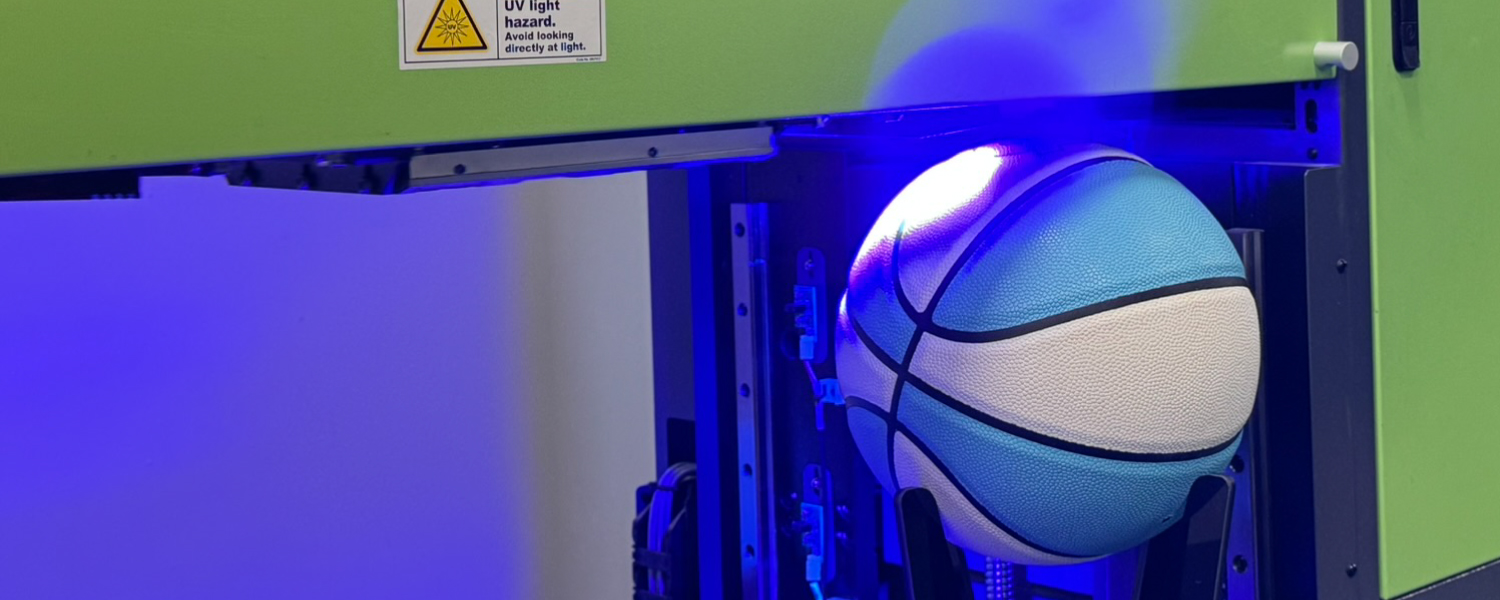
Direct to object (DTO) print technology continues to advance. Manufacturers today look to print to a variety of objects, including those with complex curves and textures. Machine vision and automation are essential and increasingly important for preparing complex objects for printing.
Boris Liberman, senior engineering manager, Engineered Printing Solutions, points out that as parts become more irregular, manual alignment and operator-dependent setup become major sources of variation. “Vision systems can help identify part position, orientation, and registration, while automation presents each object to the printer in a consistent and repeatable way.”
An important part of digitally printing directly onto objects is the manner in which the machine’s software uses stored profile data of the item to continuously adjust how ink is deposited onto the surface based on the changing height or diameters of an item. “Machine vision is a fundamental part of this, with the in-built camera or sensors gathering geometric data on each unique shape, and the machine’s software then dynamically adjusting droplet firing according to the scanned profile of the item,” explains Gregory Harwood, director of digital product management and global service, Inkcups.
Surface profile data is what a machine uses to align every ink droplet, notes Nevin White, sales manager, Koenig & Bauer Kammann (US) Inc. “Any variance in that data shows up directly in the final decoration. There’s no way around it. Kammann equipment takes it a step further by allowing the STEP CAD file for the object to be uploaded directly into the machine. Rather than scanning or mapping the container during setup, you work from the exact engineered surface profile. That precision is what makes consistent decoration possible on shapes that would otherwise be too complex to repeat reliably at production volumes.”
While it may be possible to program the equipment for a pre-determined shape or size, Paul Edwards, VP, digital division, INX International Ink Co., warns that if there are any variations in the position or the size/shape of the object, it is important to scan or map the object in real time just before the printing process. This could be carried out via a laser scan, but for efficient production it would need to be an automated process.
Using 3D CAD data or 3D scanning, Dan Valles, business development manager, OEM printheads, Epson, says the system captures the object’s geometry and automatically generates the optimal print path. “It can also identify potential issues, such as collisions or motion-range limitations, before production begins. This reduces the amount of manual setup required and minimizes reliance on highly specialized expertise. As a result, manufacturers can achieve consistent, repeatable print quality on complex shapes while improving efficiency and scalability.”
As manufacturers move toward more complex, higher volume production, Tumi Mosiah, product marketing manager, Boston Industrial Solutions, Inc., says vision can help identify a part’s location and orientation, while scanning and mapping technologies can provide information about the actual geometry and surface profile. “This technology can reduce manual setup, improve registration, and potentially support automated print-path generation. We see the future moving toward integrated workflows where part identification, surface mapping, print preparation, printing, and inspection are connected within a single automated process.”
Philip Chu, UV product manager, Roland DGA Corp., agrees, noting that machine scanning, or the addition of automation, is becoming more prevalent in industrial printing. For example, optional non-contact laser sensors can automatically adjust printing tables with just one scan. “This is a much faster process than a standard contact bar, which requires manually moving the table to check for contact. The benefits are improved accuracy, increased convenience, and a more productive, streamlined workflow.”
Vision also has an important role in quality assurance. “Inline vision inspection can help verify print quality during production and reduce reliance on manual inspection. When machine vision, pretreatment, printing, curing, and offload are engineered together, manufacturers can move toward more repeatable and traceable decoration processes. For many complex industrial DTO applications, vision and automation are not optional extras. They are part of what makes the process commercially viable,” notes Liberman.
Automation is increasingly important as product geometries grow more complex. “Features such as auto load and unload allow for reduced setup time, less human labor, and consistent, repeatable results,” adds Michael Perrelli, sales director, Innovative Digital Systems.
Historically, Liberman says automation was often limited to loading, orienting, and unloading parts. “That is changing. Robotics, vision systems, and process control are now being integrated into DTO cells to reduce manual handling, reduce shift-to-shift variation, and make decoration more scalable. In some applications, robotic inkjet end-of-arm tooling allows the print system to move around the object, which is particularly useful for large or awkward shapes that cannot easily pass through a fixed printer envelope.”
Emilio Rangel, product manager, Mutoh America, Inc., sees machine vision and automation as more of a luxury in terms of importance for prepping the objects for printing. “While these features are trending and absolutely help with quality of life, they do not hold more value than the printer’s capability to maintain accuracy when printing on complex objects.”
Oct2026, DPS Magazine