Turning Textiles

By Cassandra Balentine

Textiles offer a suitable medium for a range of applications across many industries, from fashion and entertainment to sign and display. Maya Roth, founder, CADFab Digital, understands the growth and demand of custom fabric printing and through her business provides everything from sample prints to industrial runs consisting of thousands of yards.

Driven by fashion and technology, Roth began her career studying fashion design and computer graphics. She realized early on that digital textile printing was her medium of choice and launched her own business. In 1999, CADFab Digital was founded. Based in Los Angeles, CA, the company operates out of a 20,000 square foot facility with 20 employees.

In the beginning, the business primarily offered textile design services. While printing was a smaller portion, the company utilized digital from the onset. Meanwhile, Roth closely watched the technology evolve, attending a variety of trade events, including the Specialty Graphic Imaging Association Expo and ITMA, waiting until digital was ready to effectively compete with conventional print before investing.

This happened in 2012, when prices dropped for both consumables and the finished product. Simultaneously, printhead technology evolved to enable faster speeds and excellent output quality. It was then that Roth felt digital textile printers offered the faster speeds, production quality, and prices to meet her needs and decided to make a significant investment in industrial digital textile printing technologies.

Since then, CADFab Digital has shifted to more production than design. Roth estimates that the company’s business ratio is about 95 percent print and five percent design. And the equipment continues to advance. When digital textile production was first brought in house, output was about an inch a minute. Now, it produces 100 yards an hour on average.

Application Range
The success of CADFab Digital is due to its commitment to customer care as well as its ability to offer a variety of textile applications. With expertise in many digital textile printing methods, the shop is able to print on almost every fabric in house with confidence, including cotton, polyester, rayon, silk, and linen.

To support this range of materials, it offers sublimation/heat transfer printing, direct printing, and wet printing methods. The shop’s digital print studio features more than 20 different wide format printers that create both sample and production runs, ranging from Mimaki USA, Inc. to MS Printing Solutions.

Sublimation is selected for polyester-based goods, providing output that is permanent and washable.

CADFab Digital’s direct printed products are wet printed both with reactive or acid dyes. Depending on the substrates selected, the garments are then steamed, washed, and cured to ensure the inks are set. The final product is suited for washing and hanging indoors and outdoors. A non-washable process is done on natural fabrics for quick presentations or photoshoots—these are more disposable short-term applications.

“We offer high-speed industrial textile printing for both direct and sublimation needs. We can print to almost every substrate and all processes are water-based, which also makes it a fairly ‘green’ operation,” says Roth.

The range of services and techniques CADFab Digital provides attracts a wide customer base, including high-end fashion, interior décor, entertainment, textile design, and soft signage.

Trendy Prints
CADFab Digital’s ability to create short-run custom prints allows smaller businesses and startups to get moving with little investment.

The company works with several U.S. and international fashion designers to help bring their collections to life, including Brogamats, a company that provides fashionable yoga mat bags, featuring designs with masculine appeal.

Selling direct to customers and wholesale, Brogamats relies on CADFab Digital for the textiles used to create the bags. After finding CADFab Digital online, it’s been a client for approximately three years. Roth says Brogamats generally orders prints at about 1,000 yards at a time.

The shop has used both wet printing and sublimation for this client, and the process selected is determined by budget and fabric. Based on the client’s price point, the designs are produced on either a polyester or cotton canvas using CADFab Digital’s industrial high-speed digital printers.

In terms of finishing, the company will sublimate, steam, and wash, but will only deliver fabric, not the completed good. Brogamats creates a final product from the printed textiles.

Consumer Focused
In addition to business-to-business relationships, Roth sees opportunity in consumer to business. A new endeavor for CADFab Digital is its direct-to-consumer custom fabric print offering, a Web-based portal that provides a user-friendly and affordable option for users to upload a pattern or artwork and have it digitally printed and shipped to them. Customers can also utilize the company’s in-house library of available prints.

Users upload images or select a design, choose a fabric, and add it to a cart where they can then select their desired size. Minimum orders are as low as two printed yards and pricing starts at under $20 per yard.

The site enables the shop to reach an international pool of clients that can order small runs of custom prints to create anything they desire.

An Eye for Change
CADFab Digital prides itself on its commitment to customers. To remain successful, it is always on the lookout for new trends in both fashion and technology. From managing critical color for high-end fashion clients, to offering a 24/7 easy access portal for the novice designer, the company attracts a wide customer base. IPM

Nov2016, Industrial Print Magazine
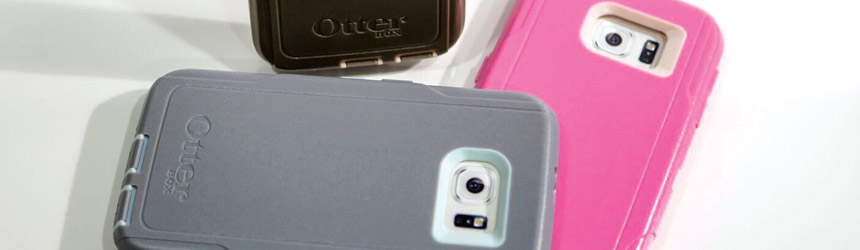
OtterBox Goes 3D

By Olivia Cahoon

Three-dimensional (3D) printing helps fast track product development and manufacturing by keeping the production of prototypes in house. Prototypes that are built, tested, and modified without any outsourcing speed up the design process. The 3D process supports creativity and maintains design confidentiality because mostly all decisions are made in house.

As digital print technology advances, manufacturers find new ways to take advantage. A designer and manufacturer of protective solutions for handheld manufacturers, wireless carriers, and distributors, Otter Products, LLC’s OtterBox division relies on 3D printers for prototyping waterproof cases for smartphone and tablet devices.

A Premium Case
Established in 1998, OtterBox is a well-known provider of premium protective cases. It serves business, education, healthcare, and government customers through a network of distributors worldwide, including online. Committed to innovation, the company aims to “inspire people to do all that they do with a dash of daring.” With over 1,000 employees globally, it is one of the top smartphone case sellers in the U.S.

Headquartered in Fort Collins, CO—with global offices in Hong Kong, China and Cork, Ireland—the CO location features a lab dedicated to innovation by prototyping and testing protective cases. This is where OtterBox reviews designs and materials to guarantee each case adheres to its Certified Drop+ Protection standards including defense against drops, bumps, scratches, and dings. According to the company, each design endures over 238 hours of analysis across over 24 different experiments that include testing against UV, thermal shock, sweat, abrasion, and humidity.

Part of OtterBox’s product development involves creating rigid, flexible, multi-color, and multi-texture prototypes of its smartphone cases. In 2008, the company purchased its first 3D printer, a Z Corp—now owned by 3D Systems—Spectrum Z510, to bring prototyping in house, which was previously outsourced. This first 3D printer allowed the retailer to only send out work it didn’t have the bandwidth to handle on site.

The company immediately realized the benefits of in-house print capabilities. Prototype designs are honed in before tooling, which results in fewer tooling changes at the manufacturer. “3D printing creates more accurate prototypes, reduces the time to market, and saves on costs,” shares Brycen Smith, technician supervisor, OtterBox.
In 2010, the company brought all prototyping in house and unless it’s a very rare exception, avoids outsourcing. “It made the most sense to do everything in house for cost, time, and security,” says Smith.

Timesaver
Earlier this year, Otterbox purchased its newest 3D printer, the Stratasys J750 from Stratasys Ltd. The 3D printer loads six materials at once without swapping canisters and can be assigned any combination of opaque, transparent, rigid, or flexible materials. It creates fine details with layer thickness as thin as 0.014 millimeters.

The device is powered by PolyJet Studio 3D printing software, which is designed to streamline workflow. This new software offers an intuitive interface that makes it easy to choose materials, optimize the build, and manage print queues. It also improves shell-based color assignment for StereoLithography and shell-based Virtual Reality Modeling Language files, an intuitive user interface, and the ability to add color textures and gradients.

“Stratasys provides the best realistic materials for our application, along with the print tolerances, quality, and print speed we require,” explains Smith.

OtterBox considers color mapping to be an essential feature for its colorful designs and trending smartphone cases. Therefore, the Stratasys J750’s automatic color mapping is an important feature. “The ability to print a wide array of colors on the Stratasys J750 is what made us want to try it out,” admits Smith. The machine features over 360,000 colors that are automatically mapped for realistic models.

Before the Stratasys J750, Smith shares it was using custom color match spray paints to paint printed parts for approvals. The process delayed prototype production. “Now we can print colors in the parts and save days on the post processing needed for painting parts. It removes days from the process and allows us to free up technicians for other work,” adds Smith.

Using the Stratasys J750, the company compressed product development and manufacturing intervals. OtterBox cut down three days of post-processing work to 30 minutes of printing and compressed 26 weeks of product development to an eight week cycle. Rather than manually making the prototype or outsourcing, OtterBox creates the design and prints in house. If there are any design changes, the prototype is reprinted just as quickly as the first iteration.

With time saved, OtterBox produces more prototypes and focuses closely on design elements. Ideas and theories are acted upon in house, paving the way for creativity and new inventions. The company intends to keep an open mind about the possibilities of purchasing more 3D printers in the future. “We are always investigating 3D print technologies that fit our business model that will help get our product to market as fast as possible,” suggests Smith.

OtterBox doesn’t intend to stop at printing prototypes in 3D either. Smith shares that if 3D printer technology continues to evolve, the company will eventually make a move toward printing production-level molds and production-quality cases.

Success
OtterBox’s success with the Stratasys J750 3D printer showcases the benefits of adapting the latest digital technology to improve business operations. 3D printing has shortened the length of OtterBox’s prototype period while ensuring design security, controlling the brand, and sparing outsourcing costs. Thanks to this technology, realistic prototypes and high-quality product displays can be designed, edited, and created in house for a small cost and in a short window of time, enabling more control and creativity. IPM

Nov2016, Industrial Print Magazine
Looking at Industrial Inkjet in Composite

By Tim Greene

For years as the markets for document-oriented inkjet-based printing systems have matured, technology providers have poured resources into the development of new markets. The bucket term “industrial inkjet” is often used to refer to the group of markets that represent the new frontiers for inkjet technology suppliers. Some manufacturers use “industrial inkjet” to refer to printers that are really fast, which is often a requirement in these markets, but a better definition is the use of inkjet in product manufacturing, whether that use is functional, decorative, additive, or packaging. Across all of these segments digital printing has a common advantage in its fundamental value proposition within the proofing and short-run models, but increasingly inkjet is challenging production and high-speed segments of these industrial markets.

Why Inkjet?
Benny Landa is famously quoted as saying that “whatever can be digital will be digital.” This profound statement has a lot of meaning, because even though together these industrial inkjet markets represent a huge opportunity for transition from analog to digital printing, there are some elements of each of these markets that, due to economics or technical limitations, may never be suitable for digital printing. However, as inkjet technology advances, particularly within ink and printhead technologies, Landa’s statement can be built on to say that “whatever can be inkjet, will be inkjet.”

This applies to market segments such as three dimensional (3D) printing, of which only about five percent of printers use materials jetting technologies today. Materials jetting relies on some of the same principles and technologies—such as printheads—as conventional inkjet printing. Part of the reason that IDC expects materials jetting to be one of the quickest growing segments within the fast-growing 3D printing market is that the potential for utilization of inkjet printhead technology in 3D printing enables a dramatic increase in 3D print speeds, which we believe has been one of the barriers to wider adoption of 3D printing in the past. Whereas some 3D printers that use filaments or directed lasers have just one point of curing or extrusion, an inkjet printhead has hundreds or thousands of nozzles.

From a technical standpoint one of the key advantages of using inkjet is that it is a non-contact printing technology, which allows for printing onto surfaces and substrates that tend to be highly variable such as some ceramic tiles. Over the past ten years the production of ceramic tiles has shifted dramatically toward digital printing. Also, the availability of rugged inkjet printheads, able to jet a wider range of materials with accuracy, at faster frequencies, and with much greater reliability has enabled ever higher levels of speed and image quality, which is key to penetration in the production sides of industrial markets.

The life of printheads has grown partly due to the increased use of MEMS technology, which is a silica-based technology that makes the printhead a single unit instead of a unit with mechanical parts that are glued together. MEMS printheads are more of a permanent part of a printing system, which is important in production environments because product manufacturers don’t want to have to stop or slow their production lines to replace printheads.

The Potential
One of the many factors to consider within the analog-digital conversion dynamic is the opportunity to create a more efficient supply chain. In some industrial inkjet markets this represents one of the biggest advantages for digital printing. The growth of e-commerce and fast fashion companies such as uniqlo and H&M—which are constantly changing over their inventories—demands a more efficient manufacturing process in the garment segment of the printed textiles market.

Also, consumer preference for local manufacturing and sustainable practices are driving changes in the current supply chain wherein fabrics are printed and garments are created months in advance in low-cost geographic markets then shipped around the world with the hope that patterns and designs meet consumer fashion trends. Digital printing enables a much cleaner production process and allows designers to test ideas and get products to market much faster.

The textile printing market has a case of inertia because of the cost structure that includes production in low-cost labor markets such as Bangladesh, China, and Thailand, but also the minimal price of screenprinting inks. For a manufacturer, the price of inkjet inks is a major barrier to “going digital” because typical textile printing inks sell for ten to 20 times what screenprinting inks cost. However, weighing the economics of the transition from analog to digital/inkjet printing should include much greater ink efficiency—using a lot less ink to create similar designs, the reduction of shipping/transportation costs, lower power consumption, and reduction of the use of clean water. The reduction in use of power and clean water is a very important issue in developing markets where the availability of water and power cannot be assumed.

The challenges for digital textile printing include the ability to print onto a variety of materials with the same type of color performance, longevity, and wash resistance that traditional analog printing processes provide. To that end, a lot of work is being done on new pigment and dye-based ink sets to meet the needs of inkjet printing systems and their customers. Many of the leading brands in the fashion industry such as Dolce & Gabbana and Hermès routinely offer inkjet printed fashions to their customers. Similar dynamics exist in the supply chain for finished goods in ceramics, wallcoverings, and laminates where digital printing creates huge efficiencies in the supply chain.

Packaging
Many of the suppliers to the inkjet market have identified packaging as one of their primary targets due to the fact that packages don’t face digital replacement. Packaging is itself a huge market opportunity, but to really understand the packaging market it is necessary to look at it in its segments—corrugated, label and flexible, folding carton, and bottles and cans. Of these segments, digital printing has only been successful in penetrating the label market, and even then by far the biggest penetration is by HP Inc. and its Indigo technology. There are many examples of inkjet-based label printers, from low-end/desktop label printers up to high-speed UV-curable inkjet label printing systems, but combined they don’t add up to as much of the label printing volume that HP Indigo has captured.

For inkjet technology manufacturers there are a variety of technical challenges within each segment of packaging and a standard set of challenges in terms of economics. When looking at displacing an alternative technology economics is, of course, a big part of the consideration. Fast moving consumer goods (FMCG) manufacturers are not looking for ways to spend more money on packaging and in most circumstances, are not willing to step backwards in terms of print quality. Moreover, larger companies insist on having not only the full range of their “equity colors” available, which can be very difficult for a CMYK inkjet printer to replicate. Also, there is a growing desire by FMCGs to use their packaging to stand out on the department store or grocery store shelves by using special effects such as fluorescents or metallic inks, which create additional technical challenges.

In addition, the printer needs to be aware of the use case for packaged goods. Will the package get wet? If the ink rubs off because the package got wet the FMCG will not be happy. Will the package be in contact with food? If so, the inks must meet health and safety regulations. Where will the package be stored? If the package fades in the sun the FMCG will not be pleased. All of these considerations are similar across the packaging market segments.

Also, these packages must be printed at very high rates of speed as FMCG companies will not accept slowing down their production lines for packaging.

Of course inkjet printing at high speed in any format creates technical challenges in drying or curing the inks. In document and graphics printing, manufacturers are able to accelerate ink drying and curing by using heat for water-based inkjet printing and using pin-and-cure technologies in UV-curing inks. In the packaging market the inkjet ink formulation is an important consideration for quality, health and safety, and durability reasons. Some iterations of UV ink chemistry may not provide the color gamut, adhesion, or the variety of finishes that FMCG companies look for on their packaging, whereas some water-based formulations may not have the required image durability.

Summary
On their own, each of these markets represent major opportunities, but together, they represent over $1.3 trillion. Of course, big parts of each of these segments will likely never shift to inkjet production based on their existing economics and the inability to jet certain types of materials, but there is clearly massive market opportunities that justify the development expense. Furthermore, unlike some aspects of today’s document-oriented markets, such as photographs and proofs, the manufacturing of products and packages, while certainly impacted by different trends, is not subject to digital replacement. IPM

Tim Greene leads Framingham, MA-based IDC’s research efforts in the area of large format printing. He delivers insight through the firm’s Production and Large Format Print Markets service as well as the Worldwide Quarterly Large Format Printer Tracker. Greene also provides in-depth analysis on adjacent markets such as digital signage and 3D printing systems.

Nov2016, Industrial Print Magazine

Industrial Print eNewsletter, May 13, 2020

    Volume IV | Issue 18 | May 13, 2020       Dear Subscriber, Label applications require some form of cutting before they’re ready for action. Depending on the final application, a variety of equipment and configurations are available to support label converting. In this week’s exclusive editorial, we look at finishing in … Read more