Industrial Print on Display

By Industrial Print Staff

The inaugural InPrint USA takes place April 25 to 27, 2017 in Orlando, FL at the Orange County Convention Center.

On the Floor
Here we spotlight what vendors plan to bring to the show. Visit Industrial Print magazine at booth 1822.

Agfa Graphics, booth 1625, showcases dedicated industrial inkjet solutions and applications including decoration, serialization, marking, and coding. In partnership with system integrators, Agfa has the expertise to design, develop, and manufacture high-performance inkjet inks and fluids.

Colex Finishing and Fotoba International, S.L.R., booth 1721, announce the new Fotoba High Performance XL320 X/Y Cutter. It is ideal for media up to 130 inches wide and 40-mil thick. The XL320 offers faster cutting speeds and can cut flexible media and a range of textile fabric up to 40-mil.

ColorGATE, booth 1635, presents the Rapid Spectro Cube, an all-in-one color management solution for the creation of ICC profiles.

Excelitas Technologies, booth 1820, features OmniCure AC2, AC5, and AC9 Series UV LED curing systems. Designed for a range of applications, AC Series systems deliver a unique air-cooled solution with high-power UV output and low-temperature curing.

Fujifilm, booth 1311, showcases a range of inkjet technology solutions for industrial and package printing. The company introduces a number of new products at the show, including two Fujifilm print engines and a range of new inks.

Global Inkjet Systems, booth 1725, highlights its latest innovations. It is a leader in software development, user interfaces, machine control, and ink system components.

Innovative Digital Systems (IDS), booth 1325, is a digital print integration company. IDS is not only a distributor for Mimaki printers, but offers a full line of specialized printers from high-speed single pass to cylindrical printers.

INX Digital, booth 1431, promotes the CP100 UV digital cylindrical printer, which adds a new dimension to decorative and packaging printing. Driven by the JetINX Printhead Drive Electronics and Ink Recirculation systems, it creates direct-to-object short runs, proofs, and prototypes in seconds.

Kao Collins, formerly Collins Inkjet, booth 1714, demonstrates the latest advances in inkjet chemistry for high-speed, single-pass printing, including water-, oil-, solvent-based; and UV-, LED-, and Electron Beam-curable inks.

Kothari Info-Tech Pvt Ltd, booth 1834, displays fabric prints illustrating the brightness and color gamut of its reactive and disperse inks including sublimation.

LogoJET’s, booth 1639, newest UV printer, the UVx90, offers an imprint area of 24x36x6 inches to accommodate products from promotional items to signage and customized home décor.

Marabu, booth 1307, showcases its newest line of UltraJet digital inks. They are specifically tailored for high-resolution printheads and compatible with most UV flatbed printers.

Meteor Inkjet, booth 1634, is a leading independent supplier of production-ready printhead driving solutions for printer OEMs and print system builders worldwide.

Mimaki USA, booth 1411, exhibits the Mimaki UJF MkII Series with Kebab MkII option, which offers 360 degree printing onto cylindrical objects such as stainless steel tumblers, bottles, cans, vases, packaging, and candle holders.

Nazdar Ink Technologies, booth 1314, manufactures a comprehensive range of ink solutions in UV, UV LED, water-based, and solvent-based technologies for printing. Nazdar has an ink to meet every application need.

Phoseon Technology, booth 1324, increases the peak intensity of the FireJet FJ100 LED curing solution by 50 percent. With WhisperCool and TargetCure technology, the FJ100 provides reliable, consistent performance.

Roland DGA Corp., booth 1524, showcases its UV LED and sublimation printers. Visitors get a firsthand look at UV benchtop printers from the VersaUV LEF series as well as inkjets from the Texart dye-sublimation family.

Sun Chemical and DIC (SunJet), booth 1701, demonstrate the latest developments in inkjet chemistry and the ability to collaborate with OEM partners, system integrators, and printhead manufacturers.

Thieme, booth 1520, is an international leader in high-quality screen and digital printing systems.

TTP plc, booth 1638, shows FlexJet, a new low-cost UV inkjet platform that can be configured for many applications from labels to garment printing, and its Vista inkjet technology.

Zünd’s, booth 1322, modular digital cutting/routing systems are ideal for industrial print. Its workflow solutions are the focus of the exhibit.

Apr2017, Industrial Print Magazine

Digital Label Trends

By Cassandra Balentine

As digital printing technologies continue to advance in terms of speed and quality, label and package printers are beginning to take notice.

Established in 1980 and offering more than 35 years of experience to its label and packaging clients, Century Label provides custom printed pressure-sensitive labels and shrink sleeves to businesses nationwide. The company employs a staff of 225 and occupies a 36,000 square foot manufacturing campus, in addition to 35,000 square feet of warehousing and distribution space at its headquarters in Bowling Green, OH.

According to Heidi Chambers, executive director, Century Label, precision printing and customer care are the company’s specialties. “With state-of-the-art digital and HD flexographic equipment and experienced color management and production teams, we are committed to providing custom printed products to meet each of our customers’ needs,” she offers.

Digital and Flexible
With roots as an analog provider, Century Label has successfully transitioned about 80 percent of its print work to digital.

Adopting the technology early on, the print service provider (PSP) installed its first digital press in 2000. “Century Label was an early adopter of HP Indigo technology, entering the market in 2000 with HP’s Series 1 press,” recalls Chambers. “Our founder, Al Caperna, had a great deal of foresight in that digital was game-changing technology in the print market,” she says.

Century Label initially selected HP Indigo technology based on several factors, including its 1,200 dpi resolution and one-to-one registration capabilities. Today, the shop operates three HP Indigo WS6800 Digital Presses to produce the majority of label and packaging jobs with customization and quality.

The HP Indigo WS6800 is a narrow-web printing solution for high-volume labels and packaging production. The press produces up to 131 linear feet per minute in color and features advanced color automation and sophisticated color matching tools to ensure accuracy, consistency, and repeatability. It supports 0.5 to 18 pt. materials, including standard substrates with inline priming.

“Like buying a new computer or phone, technology becomes obsolete quickly. Therefore, we continue to invest in state-of-the-art printing equipment, workflow automation, quality inspection, and finishing improvements,” says Chambers.

Century Label also features a fully operational finishing department. When the PSP decided to expand its shrink sleeve offerings, it invested in a new seamer; it has also purchased additional converting equipment to keep up with capacity.

In terms of substrates, Century Label prints on over 40 different materials, listing semi-gloss, white poly, and PETG as its mainstays.
With a mix of technology and a clientele of brand managers, color management is essential. “Perhaps the biggest challenge we have faced is color matching across platforms,” admits Chambers. “We became recognized experts in this area when we received G7 qualification.”

Customer Satisfaction
The use of digital is not an issue for Century Label’s customers. In fact, Chambers sees a new trend where brands are becoming educated on the quality that color digital printing provides, and have started to request it—sometimes over more economical options for longer print runs. She adds that quality has taken on a greater importance.

The company serves a variety of markets, from nutraceutical to industrial and chemical and health and beauty. However, its primary focus is food and beverage. “With continued popularity in craft beverages, this has become even more of a focal point,” admits Chambers.

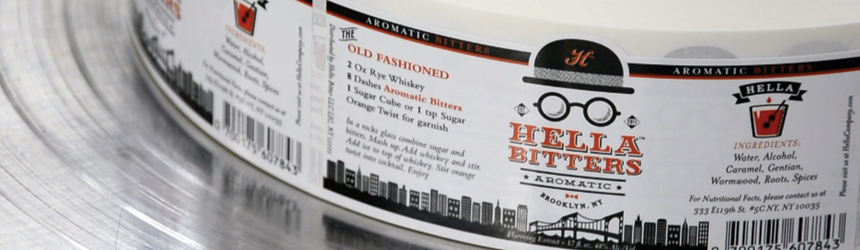
Century Label utilized its digital printing capabilities to make a splash for Hella Bitters, a Brooklyn, NY-based company that produces various flavors of bitters and cocktail mixers. The brand was looking to make an impact on the West Coast, and planned to use the Winter Fancy Food show in San Francisco, CA as the venue to launch a new line of cocktail mixers.

However, the client hit a snag when they found themselves with a last-minute label redesign right before the show. In order to make its launch, it needed the new label proofs in hand, in CA, the day before the event. It connected with Century Label, who worked with the team to ensure this tight turnaround was met.

Tobin Ludwig, co-founder, Hella Bitters, says it enjoys a great workflow with its label provider. “We reach out last minute with hard tasks and deadlines, and it’s good knowing Century Label has the team, infrastructure, and know-how to meet demands,” he offers.

Early Adopters
Century Label is poised for success, armed with the latest digital technologies and field expertise as an early adopter of label and package digital technology.

Maintaining its reputation for early adoption, the print provider is adding to its lineup of HP Indigo WS6800s after realizing its need for increased digital capacity. The shop is excited to be a beta site for the new HP Indigo 8000.

“Century Label is the first HP customer in North America to install and enhance its production capabilities with the new HP Indigo 8000,” states Chambers. She explains that the enhanced speed of the HP Indigo 8000 allows for longer digital runs, increasing its capacity to handle large-scale jobs and enabling it to offer digital solutions in a space that has been traditionally filled by flexographic print.

“We are throwing all preconceived notions out the window and are going to test the boundaries of long-run digital. For example, whereas 5,000 feet may have previously been the crossover point to flexographic, we will create a new sweet spot for digital runs,” she shares.

With a platform similar to the HP Indigo WS6800, the HP Indigo 8000 provides familiarity and speed. Chambers says that because it features a two-engine system, the printer is able to nearly double the speed of its existing digital technology. “With this installation, we’re going to break every boundary in terms of crossover point.”

Trending Towards Digital
For Century Label, the future is digital, and has been for quite some time. By being proactive with its technology investments, the PSP offers its customers expertise, quality, and speed for digital label and shrink sleeves. As brand owners become educated on the advantages of digital, Century Label looks forward to building its portfolio of services

Apr2017, Industrial Print Magazine

Unique Ceramics

By Olivia Cahoon

Digital ceramic printing offers high-quality output and a noncontact solution for decorating ceramics while reducing tile breakage. Faster setup, improved color management, reduced make ready, and minimization of repeat patterns drives ceramic manufacturers toward digital technology. Small price differences between digital and traditional inks make it a viable option for manufacturers to consider. This article looks at ceramic printing and its role in the digital market.

Decorating Ceramic
Digital ceramic printing began in 1999, but it wasn’t until 2007 that it became popular. Since then the technology has improved to compete with traditional printing methods and offer bold solutions.

David Lindsay, public relations manager, EFI, says the ceramic decoration market adopts digital for similar reasons as why other traditional printing markets adopt digital. “It can provide greater versatility and less waste compared with analog methods.” For example, the EFI Cretaprint technology provides reduced ink usage and high-end color capabilities.

Digital ceramic presses allow versatility and produce batches with individual unique tile pieces. Design software reduces the possibility of repeat patterns and eliminates the need to sort tiles for repeat prevention while allowing the product to be packed sooner.

According to Gerard Winn, senior product manager, Xaar, digital adoption is driven by the ability to produce short run lengths more economically due to the reduction in waste and set up time. Digital ceramic presses create new tile designs and mix colors, glazes, and effects to create new styles. “Digital technology is now very well established in the ceramics printing industry, with over 90 percent of the addressable market in most countries already converted,” adds Winn.

Tile Producers
Tile manufacturers looking to improve decoration operations, as opposed to print companies seeking new markets, adopt digital ceramic presses. “Industrial-scale inkjet tile decoration occurs as an integrated part of the complete manufacturing process—digital inkjet industrial tile decoration systems are designed to work in line with kilns used in tile manufacturing,” explains Lindsay.

Acquired by Sensient Imaging Technologies in 2015, Xennia was a pioneer for ceramic productions. Today, Sensient does not retail inks or technology but has experience in the ceramics industry. Simon Daplyn, product manager, Sensient, believes digitally printing ceramic tiles has significant cost benefits to tile producers. Tailored short-run productions like a ten-tile job cost the same per tile as a 100,000-tile job.

Digital technology also allows design freedom for flexible designs from marble to wood. “There is a growing requirement for bespoke products and personalized images, which was previously extremely expensive,” shares Daplyn.

Digital ceramic presses allow designs to be kept electronically—eliminating the need for engraved screens or rollers in warehouse storage. According to Daplyn, there is no need for large amounts of finish stock because single tiles are printed on demand.

Because digital printing is a noncontact process, the rate of tile breakages is reduced during the printing process. Digital also allows the base tile to be made thinner and lighter to save raw material costs and give a higher quality product.

Considerations for Digital Ceramics
Despite the advantages of digital ceramic printing, the technology has not taken full control of the ceramic market.

Winn considers there to be few factors hindering digital’s adoption of ceramic printing. These factors include un-addressable ceramic production lines, producing single non-patterned lines, and creating simple designs where there is little advantage in switching to digital.

Despite digital printing being known for color variation and vibrancy, the technology is limited in ceramic printing due to the availability of pigments that withstand high firing temperatures. However, Daplyn says digital printing lines make up for this by running as fast as 50 meters per minute (m/min) and are done at effectively the same cost per tile regardless of run length or number of printed tiles per design. “Low-volume production can be very expensive with traditional printing methods,” he continues. Recent developments in printhead technologies allow larger ink volumes to be applied.

“Over 50 percent of tiles are now printed digitally and the installed base is significant,” explains Daplyn. Digital glaze is used to achieve a final base finishing quality that allows ink to be used for decoration and protection. Daplyn warns that digital glaze can be expensive and a wasteful process.

Unlike traditional ceramic printing, digital technology allows ceramic batches to be made in unique patterns. Each piece in every batch is different, as opposed to similar tiles. Winn believes that digital ceramic printing allows new tile designs to be made with colors, glazes, and effects that can’t be achieved by traditional techniques.

“Traditionally, with analog printing, a very high-end range would carry perhaps 20 designs and so when tiling there would always be a repeat tile,” says Daplyn. Digital printing offers reduced repeat patterning that allows for a natural look—enhancing perceived quality. It is also a continuous process with little or no downtime between print jobs to eliminate screen engraving or set up.

A Viable Solution
Digital printers prove themselves to be more than capable of driving industrial production success for ceramic tile decoration. “Digital printing is now a widely preferred option because inkjet can not only successfully duplicate what has been done in the past with analog, it offers many more benefits in terms of versatility,” says Lindsay.

The ceramic printing market features an open ink model. Winn discloses that tile producers can purchase ink from a variety of sources which has driven down prices to the point where cost differences between digital and traditional inks is small compared to the benefits of digital. “We have observed a much faster adoption of digital printing technologies in the ceramics market than other markets,” he adds.

Printheads offer a re-circulation capability to allow the use of inorganic pigments which may have been prohibitive. “Digital printing is now an industrial pro
cess which is reliable, cost effective, and provides significant benefits over conventional print methods,” says Daplyn. Printhead technologies with large and variable drop sizes allow for single-pass production printing at industrial speeds.

While digital seems viable for ceramic printing, there is also a matter of whether digital ceramic presses are suited for industrial applications. Daplyn explains that it is possible due to the emergence of print manufacturers from the ceramics market into other applications like textiles. He describes printing ceramics as a more forgiving process for image quality compared to other graphic areas where substrates are not porous and a key requirement is drying. Ceramic presses need accuracy for available ink technologies to allow the hardware to be viable for industrial applications.

A Look at Ceramic Presses
Durst’s Gamma XD Series is an eightcolor inkjet ceramic printer with a maximum printing width of 1,404 mm. It is equipped with the Durst High Definition Printhead Technology with dual ink circulation and Adaptive Dot Placement Technology for print uniformity. Its printhead cleaning system ensures high image quality and color similarity. Paired with the Digital Material printhead technology, the Gamma XD Series jets large ink amounts for special effects like luster, glossy, matte, white, metallic, and glue inks. The Gamma XD Series features built-in remote diagnostics functions and a user guide for printhead replacement to reduce potential maintenance downtime.

EFI’s newest ceramic offering is the Cretaprint D4 that features up to 12 print bars. It meets tile decoration demands by allowing users to incorporate a full range of ceramic inks and digital print effects. The Cretaprint C4 was upgraded to include the option of running the new 2001 Xaar printhead, which features 2,000 nozzles per printhead for bold color, high coverage, and special effects. The C4 model is designed for energy savings, ease of use, and lower maintenance costs. It prints a maximum tile width of 745.5 millimeters at 50 meters/minute. The printer has eight printing bars with an automatic nozzle cleaning system to generate fewer permanently missing nozzles and to extend printhead life.

Both Cretaprint printers were featured at industry show, Tecnargilla, in Bologna, Italy. “We also showed the Cretaprint M4-SOL, which is the most popular model of EFI Cretaprint’s SOL series of printers,” says Lindsay. The M4-SOL is designed for producing high-transit porcelain polished tiles. It allows users to jet soluble salt inks and bring rich colors to porcelain tile decorations with lapatto and polished finishes.

The KERAjet K700 and K1400 displays up to 12 printing bars at a speed of 90 m/min. Its active system includes a continuous ink stream to provide a steady printing system. The printer also features an integrated picture processor and multi-printhead technology. The systems handle a maximum width of 700 inches. It’s proofreader system is used for different shades of color in place. The KERAjet K700 and K1400 also offer multi-entrance, relief detector, and printhead units oriented by the client’s desire. KERAjet offers 24/7 technical support, operators technical training, and inhouse electronics manufacturing.

Sky Air-Ship Digital Printing Equipment Co., Ltd displays the FLATMASTER3020 UV flatbed printer that caters to art glass, ceramic decoration, microcrystalline stone, furniture plates, and electrical panels. Its homothermic negative pressure ink supply system maintains ink viscosity and provides low temperature and high-speed printing stability. It prints in eight colors and uses Caldera color management software.

Introduced in 2016, Xaar features the Xaar 1003 series and Xaar 2001+ of print heads. Both series deliver high image quality and productivity. The Xaar 1003 offers one color at 360 dpi and the Xaar 2001+ offers one color at 720 dpi or two colors each at 360 dpi. The Xaar 1003 has eight grey levels and 1,000 optimized geometry nozzles to deliver improved drop placement accuracy. The Xaar 2001+ is available in three drop sizes for fine details on wall tiles, high laydown to cover a range of ceramic designs, and high laydown for special effects. The printhead has 2,000 optimized geometry nozzles to deliver high productivity with a range of oil-based ceramic inks.

Xaar ceramic printheads offer integrated technologies to ensure maximum production uptime in ceramics factories with harsh environments with minimum operator intervention. Xaar TF Technology ink recirculation ensures continuous ink flow directly past the back nozzles to avoid air bubbles and carry away unwanted particles. The XaarGuard nozzle plate provides protection from mechanical impact to minimize production interruptions. Xaar’s Tuned Actuator Manufacturing allows optimization for actuator performance in each printhead. This process provides scalability with a quick set up and achieves consistent print quality across long print bars with multiple printheads. The Xaar 2001+ features new XaarSMART technology that reports ink temperature and printhead status in real time. It allows printer performance to be adjusted and deliver consistent print quality.

Ceramic Competition
Despite competing with analog technology providers, Lindsay believes digital adoption’s success in the ceramic market makes digital technology vendors the primary competitors. Digital print allows ceramic manufacturers to expand their offerings to include unique tiles at competitive prices. Advancements in ink technology create opportunities for digital ceramic printing to prosper.

Apr2017, Industrial Print Magazine

Boxes and Boards

By Melissa Donovan

Traditional analog printing of corrugated board is typically done via flexography. In digital print, two methods are emerging. For longer runs, sheets are pre-printed with digital technology and then attached to corrugated material using a separate device. The second practice—and the focus of this article—is directly printing to corrugated boards.

The use of corrugated substrates in digital print continues to grow as converters, corrugators, and their customers demand smaller runs and personalization. Popular corrugated applications include packaging and point of purchase (POP) or point of sale (POS) displays. Digital print devices are equipped with features to efficiently create high-quality corrugated products in manufacturing environments serving the industrial space.

Defining Industrial
According to I.T. Strategies, Inc.’s report What is the Future of Industrial Digital Printing published May 2015, industrial digital print can be defined as manufactured products which are printed. “Industrial more usually means a specific set of markets and applications for printing and patterning of manufactured products,” the report states.

Most vendors are inclined to agree with the analyst firm’s definition. For example, Inca Digital classifies industrial as when print is part of the process of manufacturing. The company has split industrial printing into four broad categories—décor, packaging, textiles, and industrial. Décor includes wood, laminate, décor paper, and wallpaper; packaging consists of corrugated and cartons; textiles includes home and apparel; and industrial is a catch all with membrane switches and glass.

“This is definitely an issue of semantics. We use the term industrial to define markets for inkjet that exist outside the mainstream graphics and print segments—ceramics, glass, and vinyl floor tile. I’ve also seen the term industrial used to define market segments that could be characterized as very high speed or high volume. I think this broader use of the term would be where the corrugated market would be a fit,” argues Larry D’Amico, large format sales director, North America, Durst Image Technology US LLC.

Eladio Lerga, project engineer, Barberán S.A., believes that industrial printing is printing dedicated to the final product, not just for marketing purposes. “In the case of corrugated, the carton box is a part of the product, not just an advertisement, but also its description and technical specifications.”
Printers considered industrial are those, “that can be used in a manufacturing environment, which can be operated by multiple shifts per day with very little downtime and maintenance required,” explains Josh McNaughton, product specialist, Xanté Corporation.

Industrial-Sized Products
Corrugated products produced on an industrial scale include packaging and POP/POS displays. Both applications benefit from digital’s ability to provide high-quality, cost-effective short runs in an abbreviated timeframe.

“POP/POS displays are often printed using corrugated as a medium. Currently, POP/POS printers are looking to diversify, with many looking to packaging as the next area. As a stepping stone into this application, shelf-ready packaging, transit packaging, and prototype packaging can all be printed using digital,” explains a representative from Inca.

Lerga separates corrugated into two categories. Big corrugated boxes—like TV, pallet skirts, and POP displays are on the larger side physically and in volume; whereas corrugated boxes for wine, fruit, shoes, and other industrial products are printed in small runs of less than 10,000 boxes.

All of these applications benefit from digital, which according to D’Amico, is best positioned for high-quality, four-color, short-run, quick turnaround applications in the corrugated space.
“Digital allows manufacturers to run more efficiently, maximizing their labor and warehouse space,” adds McNaughton.

Becky McConnell, product marketing manager, Fujifilm North America Corporation, Graphic Systems Division, agrees. “With shorter runs and localized, versioned packaging, inkjet opens the door to a more profitable means to complete these jobs.”

“The main selling point for digital printing is short runs and customization—digital is seen as a complementary technology alongside screen, flexography, and offset,” says a representative from Inca.

Disadvantages of Digital
Digital’s sweet spot is short runs. Current technology can’t compete with the traditional means of printing to corrugated board—primarily flexographic presses—when it comes to longer runs.

“Digital has a tough time being cost competitive for lower quality, single-color, long-run applications,” shares D’Amico.

According to McNaughton, speed is a disadvantage of digital. “Direct print inkjet printers are slower than traditional flexographic presses once the flexographic press is in production with the inks and plates loaded.”

“For long-run corrugated production, traditional printing is still advantageous when it comes to cost. Until the ink prices can be more competitive, we will not be able to take the long-run work from these areas,” advises a representative from Inca.

Other issues cited in the I.T. Strategies 2015 report include the suitability of UV inkjet inks for different corrugated surfaces, UV ink recycling, printhead strikes from the uneven corrugated substrates, and drying of aqueous inkjet inks at conversion process speeds in higher coverages.

First Adopters
The number of users working with digital technology printing to corrugated board in industrial settings continues to grow. All hope to benefit from digital’s support of smaller print runs and personalization, just as the very first adopters of the technology did.

Some of the initial users of digital print in this space, based on McNaughton’s experience, were convertors specializing in short-run containers. “They required full-color graphics and these were not cost effective using flexographic or lithographic lamination due to the low volume.”

McConnell believes that European corrugators were some of the first, adapting inkjet in their manufacturing plants. “A lot of that started with the drive for customized jobs, as well as customers demanding faster turnaround times. Examples of this would be POP corrugated pallets and shelf displays that a corrugator manufactures for a particular customer.”

I.T. Strategies found in its What is the Future of Industrial Digital Printing study that digital is not yet having an impact on mainstream packaging convertors. Most of these devices are found in non-corrugated digital print provider channels or independent sheet plants.

Printing to Corrugated
Digital printers designed for direct printing to corrugated products include features that specifically address the nuances of this specialized substrate. Quick drying ink, material handling capabilities, and vacuum hold down techniques are found in most devices. Here, we share some of the products currently used in industrial settings.

Barberán’s Jetmaster line is available in 1,260, 1,680, and 1,890 millimeter (mm) widths. The portfolio features CMYK standard with options for light cyan and light magenta or orange and violet. UV-curable inks are suitable for all types of paper and flutes with a production capacity of ten to 55 meters per minute.

The Bobst Digital Printing Press for Corrugated uses Kodak Stream Inkjet Technology and aqueous-based food compliant inks. The press prints at speeds of up to 200 meters per minute at a resolution of 600×900 dpi, aided by a vacuum belt sheet transport system. It incorporates the Bobst iQ400 quality control system and an ejection process for any non-conforming products. A pre-coating unit allows for printing onto a range of corrugated substrates.

Durst’s products designed for the corrugated packaging market range from 40 boards an hour to over 5,000 boards an hour with its new single pass technology, the Rho 130 SPC. The Rho 130 SPC can be configured with up to six colors and features a maximum printing width of 1,300 mm. Up to 12 mm thick corrugated cardboard and paper media can be printed with a maximum resolution of up to 800 dpi at a print speed of up to 9,350 square meters per hour.

The EFI Nozomi C18000 features single-pass LED digital inkjet technology, which offers low volatile organic compounds (VOCs) and less waste and consumables. It prints at up to 77,758 square feet per hour (sf/h), or up to 6,600 sheets per hour at two-up printing. Maximum board size is 71×118 inches. The printer handles a number of corrugated flutes—A, B, C, D, E, F G, N, O, AB, AC, BC, EB, EF, and triple wall. It is equipped with automated material stacking to a pallet or bundle.

Engico S.r.l. offers the Aqua 250 water-based inkjet press for direct printing on corrugated boards and other paper-based materials. The ink set is VOC free and odorless. Modular, the printer can be updated in the future with additional upgrades. A vacuum belt system flattens cardboard and keeps it stable under the printheads.

Fujifilm offers the Inca Onset X series for high-production environments. To better suit printing to corrugated boards, the device is equipped with an adjustable vacuum table skin and an adhesive substrate cleaner. The printer is also available with an ink system developed specifically for corrugated boards.

HP, Inc.’s HP Scitex 17000 Corrugated Press is ideal for short- and medium-run production. The eight-channel, four-color device prints at speeds up to 10,764 sf/h. It is equipped with HP Scitex Corrugated Grip to handle board warp up to 40 mm. A stack-to-stack loader and automated media handler helps in controlling corrugated sheets.

The Inca Onset series is available in a range of handling systems designed to boost productivity when compared with manual handling. A variety of sheet sizes can be prepositioned during the print process, ready for the handling system to remove the printed sheets swiftly and load the rest.

Sun Automation Group offers the CorrStream series of production digital printers for corrugated board. The Series 66, 40, and 20 printers run at speeds of up to 8,000 sheets per hour offering personalization and mass customization. All three sizes feature High Quality Post Print print quality.

The Xanté Excelagraphix 4800 is a single-pass, full-color CMYK inkjet printer capable of printing up to 7,800 sf/h of corrugated board. It is equipped with iQueue software, which handles variable data, barcoding capabilities, and color management. The printer runs with aqueous dye inks, which provide instant dry time and no VOCs or fumes for those print providers using the device.

An Influential Position
Corrugated board printing is a cornerstone in the industrial market. It makes sense that digital effects it in someway. While the technology is in its infant stages, digital is positioned to influence the future of packaging and POP/POS displays as more convertors and corrugators integrate these devices into their workflows.

Apr2017, Industrial Print Magazine
Specialty Printing

By Olivia Cahoon

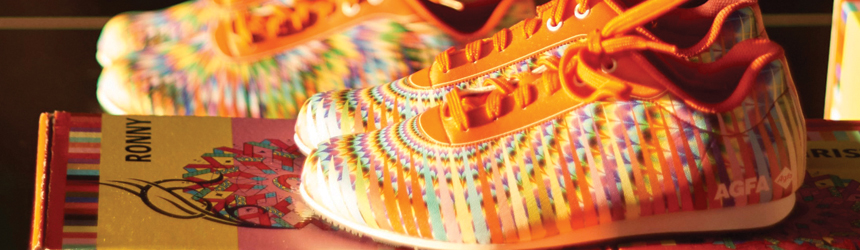
As specialty printing advances, manufacturers use digital printers to create unique and in-demand products. The evolving technology allows for prompt personalization completed in house and broadens the manufacturer’s offerings. This article features specialty printing technology optimized for personalized promotional products without outsourcing.

U.S. Press Broadens
Established in 1981, U.S. Press serves over 25,000 businesses nationwide from entrepreneur startups to Fortune 500 companies with high-quality print marketing solutions in Valdosta, GA. It was the Buescher family’s dream to help entrepreneurs grow professionally and affordably. Kent Buescher, president/CEO, U.S. Press, started the company with his wife, Dawn Buescher, as a marketing-focused commercial printer with a goal to empower business owners with the right marketing tools and teach entrepreneurs on how to effectively use them.

Starting with three employees, the shop offered graphic design and offset printing at the onset, serving from a 1,500 square foot work area. “Ten years of offset printing comprised 100 percent of our products. Today, digital and large format printing comprises almost 60 percent of our business and it’s growing,” says Buescher.

The shop still aims to help entrepreneurs achieve their dreams. With 26 employees, U.S. Press serves all 50 states and is based in a 34,000 square foot work area.

U.S. Press prides itself in providing business owners with low-cost, high-quality print marketing materials with first-class service and quick turnaround times. The shop produces full-color brochures, catalogs, flyers, presentation folders, posters, flyers, banners, signs, store displays, and window displays.

The print provider uses equipment from Canon Solutions America, HP, Inc., and Mimaki USA, Inc. for large format printing. The shop also has four Roland DGA Corporation SOLJET Pro 4 XF-640 printers that run eight to ten hours daily and two Roland VersaUV LEF-300 printers. “Every piece we operate provides us solid service, but our Roland presses are almost trouble free over the last three years,” says Buescher.

Reaching New Levels
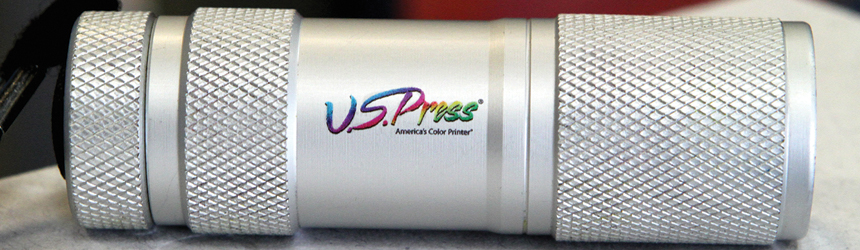
U.S. Press optimizes Roland’s VersaUV LEF-300 benchtop flatbed UV printer to produce high-quality marketing solutions. The VersaUV LEF-300 offers direct printing capabilities on a range of materials including three dimensional (3D). It prints on objects like pens, smartphone cases, signs, personalized awards, giftware, and laptop covers with Roland’s ECO-UV ink. ECO-UV ink options include white ink for clear or dark colored materials, gloss for gloss and matte finishes, and multiple layers of clear ink to simulate embossing and 3D textures. “A variety of unique items can be printed with the VersaUV LEF-300,” says Buescher.

The printer’s maximum print width is 30 inches and up to 3.94 inches thick. The VersaUV LEF-300 uses four printheads and two UV LED lamps for fast curing to increase productivity. White ink and gloss circulates through two rows of nozzles for multilayer printing with increased density and opacity.

The printer’s vacuum table holds thin materials in place. It prints on a variety of substrates including PET, ABS, polycarbonate, and soft materials like TPU and leather.

According to Buescher, the LEF-300’s small bed size, slower print speeds, and high square foot costs of printed items are sometimes challenging. However, the shop does not employ printing alternatives for applications used with the LEF-300. “We have not found any other device that can print on these unique items,” he explains.

Graphic Arts Expands
Digital printing allows an array of promotional items to be quickly produced. These applications include keychains, pens, umbrellas, water bottles, tote bags, hats, and mugs. U.S. Press takes advantage of the high demand for promotional items and uses the VersaUV LEF-300 to promote sales.

Buescher says he first came across the VersaUV LEF-300 at a graphics art show. He immediately admired the quality of the products coming from the printer. “I began to think of items we could produce for our customer base of over 25,000 and after much consideration decided to order a pair of them last year.”

Using the VersaUV LEF-300, Buescher produces marketing promotional items like golf balls, jump drives, drink coasters, and cookie tin covers for several specialty manufacturers in GA. “At the same time, we produce many other unique prototype items,” he adds.

For specialty printing, U.S. Press purchases items through Alibaba from China. Currently, the shop purchases 5,000 pieces of each item intended for customization. “It takes 30 minutes per bed full of items to print each load,” says Buescher. For example, the shop prints 50 golf balls per load.

Buescher adds, “we are still in the early stages of producing these new products so it will be a few months before we have a better handle on what the demand is.”

Specialty printers like the VersaUV LEF-300 print a range of applications including toys, control panels, and sports gear as well as specialized signs, tabletops, wood signs, game pieces, and clocks. For glass and trophy personalization color is added. This application uses white ink over colored glass to make colors pop and an embossed effect is added using clear ink. Buescher believes gloss varnish makes applications look particularly stunning.

As the technology for direct printing grows, manufacturers and print providers take notice. “We are hopeful that the items we produce become a large future part of our business,” he concludes.

Serving All Industries
Specialty printers manage a range of substrates, but as technology advances the output possibilities expand. Buescher says his customers are ecstatic about the applications produced at U.S. Press. Printers like Roland’s VersaUV LEF-300 pave the way for manufacturers to offer interesting and new applications that get noticed.

Apr2017, Industrial Print Magazine

3D Printing Opportunities for Industrial Printers

By Pete Basiliere

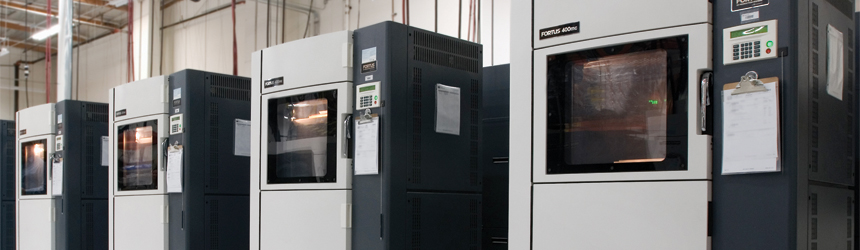
The use of three dimensional (3D) printers in manufacturing processes is accelerating across industries. The capabilities of enterprise 3D printers are expanding, with evolving hardware and software capabilities and an ever-growing range of usable materials.

Yet a conflict remains. While enterprise 3D printers—also known as additive manufacturing tools—are a viable option for many organizations, they have not yet replaced, and in most cases are unlikely to soon replace, conventional production methods. Therefore, industrial printing professionals must monitor and assess 3D print (3DP) use and infrastructure requirements as additive manufacturing transforms their markets.

3D printers are used to augment, improve, or expand product lines; provide new revenue sources; and develop customized or personalized new products. Hype is still a factor driving the market, but much less so than five years ago. Industrial printing professionals who are evaluating or planning to use 3DP see through the hype and are aware of the real, limiting characteristics related to cost, throughput, and quality. To ensure success, the industrial printing professional must learn about 3DP hardware, software, and materials; position 3DP in their business models; and develop a robust infrastructure and the business capabilities to support 3DP.

3D Printing Opportunities and Uses
3DP is composed of seven different technologies—refer to the sidebar, 3D Print Technology Definitions—with new product introductions by a growing range of 3DP manufacturers expanding the definitions. As an industrial printing professional, the first step is to become familiar with the technologies, their capabilities and constraints, and the related 3D scanners, CAD, or 3D modeling software, as well as printable materials. Begin the evaluation process with the end product in mind in order to narrow the focus onto what is truly needed.

Explore opportunities to exploit 3DP by determining whether the organization has the need or opportunity to improve product R&D processes by rapidly and iteratively prototyping products or enable product designs that are unconstrained by the limits of conventional manufacturing processes. 3DP can help add value by personalizing products for customers and provide 3DP services to retail customers, including real-time merchandising. In addition, it may streamline manufacturing processes by rapidly producing 3D printed tools, jigs, and fixtures. On the other end of the process, 3DP can help shorten the supply chain, outsource certain production activities, and reduce inventory by printing parts prior to assembly or close to the demand.

Work closely with business and operations management peers to identify 3DP opportunities. Crowdsource ideas on how to leverage 3DP by engaging colleagues, customers, or partners in ideation. Evaluate how other organizations within the industry leverage 3DP, especially the “near-neighbor industries,” that are potential sources of disruptive additive manufacturing use. Linking the opportunities to business capabilities is a key step in identifying the best prospects for innovation that can be presented to senior management.

Note that it is not necessary to purchase a 3D printer to explore or implement 3DP. While many material extrusion and stereolithography 3D printers cost less than $25,000, the cost of investing in industrial 3DP with, for example, the ability to produce finely detailed metal parts is still quite high for most enterprises. Furthermore, the effort required to thoroughly understand the range of materials, the design and production time involved, and the skills required to operate 3D printers may make you want to minimize risk.

3DP Service Bureaus
Organizations often use 3DP service bureaus to experiment with new designs or materials, to test the 3DP process before buying a printer, and to experiment with different 3DP technologies. 3DP service bureaus offer access to the appropriate technology relatively quickly and at a reasonable cost, and may provide creative, design, and engineering services to supplement your own.

3D printing service bureaus are companies with factories that produce objects created with 3D printers. The objects are derived from supplied digital or physical models, which may be concept models, prototypes, or finished goods. The items are produced with 3D printers employing one or more of the seven additive manufacturing technologies.

While there are 3DP services that cater to consumers, most interest is in 3D printing service bureaus that provide the items an organization needs relatively quickly and at a reasonable cost. A 3D printing service bureau may be used for a number of reasons including to avoid having to invest in a 3D printer, test the 3D printing process before buying a printer, and access a 3D print technology that is not currently available in house.

A 3DP service bureau is ideal for part of longer term planning, for example, to assess the viability of a new product or design, a process that automotive and aerospace manufacturers have taken for decades. The plan is executed with the idea of transitioning to permanent, in-house production if the new item proves successful and profitable. In other words, a 3DP service bureaus’ flexibility, convenience, and personalized touch provides a practical, useful way to test a concept without a significant investment in additive manufacturing technologies.

Selecting a 3DP Service Bureau
Gartner research found that once an organization determines it will outsource a 3DP job to a service bureau that it will typically seek a provider with demonstrated finished piece quality, design services, and attractive pricing. In 2016 Gartner surveyed professionals in seven countries who are using, evaluating, or planning to use a 3DP service bureau by 2018 to rate up to seven selection criteria for selecting the bureau. 60 percent of the respondents indicated finished piece quality was their first, second, or third most important criteria. 47 percent indicated that design services was next highest criteria.

This finding is interesting because price, which is often the number one criteria for purchasing professional, did not top the list. Of course, that preference may change over time, as the use of additive manufacturing tools and materials become more widespread, giving 3DP service bureau customers more choices. Near term, those customers and industrial print professionals will focus on making sure the 3D printed items meet or exceed what is possible with conventional technologies.

Including 3D
The use of 3D printing service bureaus will become much more common in the coming years, as additive manufacturing technology improves, the material range expands, the quality improves, and additional service providers enter the market globally. Expect 3DP service bureaus to adopt new technologies and devices while new service providers enter the market. The growing number of service bureaus will increase competition and smaller bureaus are likely to consolidate to stay competitive, giving more reasons to include 3DP service bureaus in a supply chain.

Pete Basiliere is research VP, additive manufacturing, Gartner. He provides research-based insights on 3D printing and digital printing systems, best practices, go-to-market strategies, and technology trends. Before joining Gartner, Basiliere worked in roles that included operations manager responsible for corporate printing and mail facilities, as well as engineering manager responsible for digital and analog printing equipment selection, plant layouts, and new product development.

Apr2017, Industrial Print Magazine