Can Do

By Melinda Tetreault

Direct printing to aluminum cans is a growing trend. Many verticals, like beverages, benefit from digital printing. Small runs, variable printing, and cost savings are some of the advantages. “There is a growing demand for greater flexibility for shorter run and multi-version beverage packaging. Digital printing allows for different images to be printed one after the other without the need to create and change printing plates or ink,” says Sarah Jacks, project specialist, INX International Ink Co.

Through the continued use of this technology, brand owners leverage quality, flexibility, and efficiency in a way that allows products to appear in stores faster than ever before. The use of digital printing allows companies extra time to properly finalize mockups and revise designs without disrupting the process and expanding timelines. Further, companies have a competitive edge by getting their products to market sooner than their non-direct printing competitors.

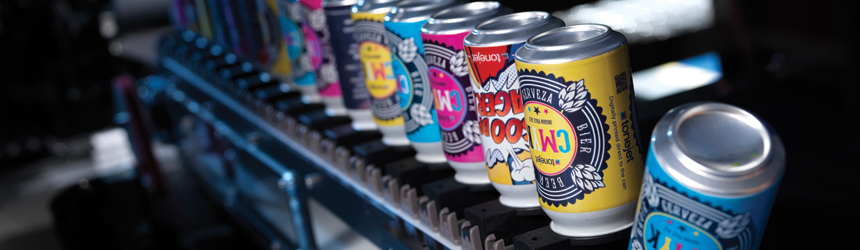
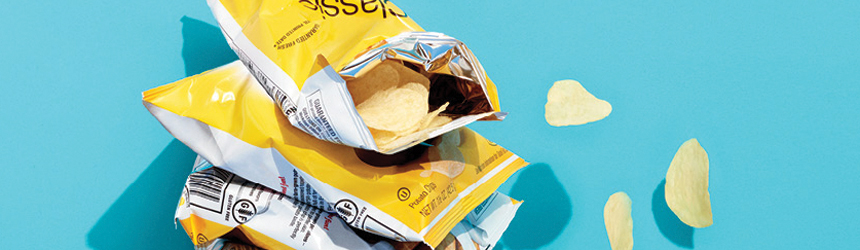
Above: Aluminum cans directly printed using Tonejet’s Cyclone printer.

All-Time High
While the technological capabilities to print directly on aluminum cans was available for years, it spiked only recently. According to Alexander Hinterkopf, managing director, Hinterkopf GmbH, digital decoration of metal and plastic packaging had its breakthrough point at the turn of calendar years 2016 to 2017.

This is attributed to multiple reasons, such as growth in short product runs driven by the craft beverage industry, growth in mass packaging customization of mainstream products—special pack variants for specific events or retail outlets, the desire to avoid the high cost and recycling issues associated with shrink sleeves, and the growth in use of fully recyclable metal packaging—generally, at the expense of plastic, cites Rob Day, CEO, Tonejet Limited, a TTP Group plc company.

“Printing on cans was always of interest, but with the volumes that are produced there were limits on what technology could be used. Today, with the increased emphasis on personalization and customization, the value of digital printing is more recognized. Brand owners want to connect with customers. Creating a one-to-one connection with something more meaningful or personal in the packaging is a great way to strengthen the bond,” admits Karl Dueland, VP/GM, new markets development, Xerox Corporation.

Another major contribution to growth relates to the design phase. With use of digital printing technologies, product designers and companies have a better idea of what the final product will look like, whereas previous mockups were not as reliable. “Printing a design or concept directly on a can better represents the final production appearance. An option that allows for direct printing on cans prior to piloting or production helps streamline the process. Using other methods such as shrink sleeve mock ups may prove to be less representative of what a can will look like once it reaches production level,” shares Jacks.

For example, INX’s CP800 UV Digital Cylindrical Printer features a relatively small footprint with an all-in-one feel, offering design and decoration for two-piece metal products in one device. A premium, eye-catching design influences a brand’s overall sales from shelf decisions, so achievable color expectations must be possible as well as accurate and consistent, says Jacks. Using the INX Color Perfection program assists all involved in the design, proofing, and production phases to select, communicate, and approve color efficiently, reducing lead times and getting labels to market faster. The INX Color Perfection program allows customers to ensure their design is exactly what the mockup intends for the final product.

Today’s technology is also advanced enough for manufacturers to place a certain level of dependence on it. As Hinterkopf emphasizes, “reliability of a machine is of paramount importance. Full utilization of any production system requires the absence of any dysfunctional time that negatively impacts productivity and profitability.”

Hinterkopf’s D240 digital printing machine passed the real life test at Germany-based packaging manufacturing company Ritter. The first D240 was implemented in 2015 for around-the-clock production. When a large quantity order is complete, production of small orders continues without any interruption—there is no change over time. Today, Ritter operates three D240 digital printing systems and is planning for a complete departure from screen printing.

Can Contenders
Many industries are a fit for direct printing on aluminum cans. The level of creativity is unlimited thanks to digital technology. Some examples include craft brewers, metal packagers, sparkling water products, and spiked seltzer manufacturers as specific vendors benefiting.

“There is great opportunity in various markets, such as craft brewers, for those that produce less than 5,000 pieces a day. Lower volume runs allow the manufacturer to take advantage of greater customization. Think personalized cans for special events such as weddings or promotions,” suggests Stephen Chrisos, marketing manager, Inkcups.

According to Day, several industries show interest in digital printing. “Traditional pressure-sensitive and shrink sleeve label printers are keen to understand the new technology and how it fits into their business, as it can typically reduce cost per label by a half to two thirds. They see the growth in craft beer as a way to fund the acquisition of a new technology platform that will enable entirely new applications and markets as their customers start to understand the potential it offers throughout the beverage industry,” he continues.

“We could look at any industry that has packaging containers with labels. Direct printing eliminates the inventory and management of labels with the flexibility to print what you want on the object, right when you need it. There is no waiting for labels to be printed and loaded into the system for a production run,” agrees Dueland.

Tonejet made inroads with larger beverage brands looking to print directly onto cans in lower volumes as a unique way to communicate with consumers. For example, the company recently printed cans in very low quantities for the Tomorrowland music festival sponsored by Anheuser-Busch. 10,000 cans were printed using 15 different designs featuring national flags in runs between 15 and 1,400. “The ability to digitally print directly to the cans made the project possible. With traditional printing these would have been prohibitively time consuming and expensive,” explains Day.

“We also see strong demand from entrepreneurs and startups offering mobile filling and packing to the craft sector, or creating new beverage can converting service businesses,” he adds.

There is real interest from companies of all sizes. “Seasonal products and special editions are virtually the same cost as large quantities. In theory, consumers could order a single individualized piece, without affecting production cost,” explains Hinterkopf. This allows small businesses to utilize the technology in such a way that design and quality are not given up in favor of lower production costs.

Medium-sized manufacturers traditionally purchase undecorated blank cans that are pre-necked—cans that have yet to go through the curved neck process—when the can is formed under pressure to create the curved neck before the lid is attached. While these cans can be printed immediately before filling, challenges such as contamination from necking oil and PTFE anti-slip materials can occur, according to Day.

“At Tonejet, we developed a can preparation process that removes the containments and leaves the surface of the can in perfect condition for printing, immediately before the image is laid down. This technology allows companies to be at ease when designing their products with the full knowledge that quality will not be sacrificed in regards to direct printing,” he says.

Larger manufacturers working with pre-necked cans are candidates as well. “Larger can manufacturers need to print onto un-necked cans, and require a robust but flexible print result, which will survive the subsequent can necking process,” explains Day. Tonejet offers a unique process that addresses this issue. The result is an image layer that is less than a micron thick, which allows the printed cans to run through the necking process with the decoration untouched.

Clear Wins
Direct printing to aluminum cans is a growing trend. Demand is a result of efficiency, quality images, and the growing ability to fine tune color selections in the design process. With this multitude of reasons to choose direct printing over other methods of branding to aluminum cans, manufacturers of all different sizes from a number of industries should consider the process.

Sep2018, Industrial Print Magazine
Can Printing
Digital Print

The Sticky Side of Packaging

By Melissa Donovan

Digital printing technologies are capable of printing to materials used in flexible packaging applications, however it is only one step in the process. Lamination of two films by means of an adhesive is the most common technology used to assemble the base structure in flexible packaging for reverse print applications. This type of lamination bonds two layers of film, foil, or paper using adhesive.

Three common adhesives are used to bond layers of flexible packaging together—solvent based, solventless or solvent free, and water based. All three are used to construct flexible packaging. To fully bind all of the layers together, the piece is put through a curing process referred to as polymerization, which is completed on a dedicated machine designed to apply the adhesive.

Above: Ashland’s laminating adhesives present new possibilities for flexible packaging in place of traditional packaging.

A Trio of Adhesives
To understand the various types of adhesives, Justine Hanlon, market manager flexible packaging, H.B. Fuller Company, provides a rundown of each.

Solvent-based adhesives are typically easy to use and offer a range of bonding and application settings. They also provide a clean print on metalized surfaces and specialty print jobs due to superior performance, shares Hanlon. However, they contain volatile organic compounds (VOCs).

H.B. Fuller’s flexible packaging solutions and materials address the rapid growth and rigorous requirements of the flexible packaging industry. The company’s line of flexible packaging solutions and materials includes Flextra solvent-free and solvent-based adhesives for film, paper, and foil laminating.

Solventless adhesives are formulated without solvent and have low VOCs. While they feature good running speed, cure times are longer.

Water-based adhesives are what Hanlon refers to as heterogeneous systems. They are comprised of a solid polymer phase dispersed in an aqueous phase. Benefits include no VOCs, fast run speeds, cost competitive, and easy to clean. However, they don’t have a strong chemical or heat resistance and require a large amount of energy to drive water off the substrate.

For those adhesives most commonly used in digitally printed flexible packaging, Catherine Heckman, global industry manager, Ashland, says solvent free and solvent based are the most widely used, with water based not as common due to performance limitations in thermal resistance and poor moisture resistance.

“Water based would be used more in an overlaminate where the digital print needs to be protected. A catalyst is recommended to be used with the water-based adhesive to provide improved performance properties,” she suggests.

Heckman notes that in the aforementioned example she is referring to HP, Inc.’s inks used with laminating adhesives when discussing digital printing technology.

Ashland provides innovative technology solutions for a range of narrow-, mid-, and wide-web applications. Its laminating adhesives open new possibilities for using flexible packaging in place of traditional packaging. Faster curing adhesives improve converters’ productivity. The company’s extensive product line of pressure-sensitive adhesives, functional coatings, and primers are formulated to meet customers’ most stringent requirements in areas such as food and beverage, shipping, transportation, health and beauty, industrial, postage, and security printing.

Product Advancement
The efficiency and cost savings digital print presents in regards to shorter runs is advantageous for many. Brand owners can inexpensively order limited edition or customized packaging by country, state, or household. Those in the food and beverage industry understand these benefits, however they require adhesives that provide little to no potentially harmful chemicals.

In Packaging Adhesives Market Size & Share, 2018 to 2025, an industry report by Grandview Research, it was cited that globally, about 50 percent of the total packaging products manufactured are utilized for food packaging. Flexible packaging applications used for food, in terms of revenue, accounted for a market share of around 33 percent in 2016.

“Food safety is one of the primary concerns and top priorities for developing new packaging adhesive products,” states the Grandview Research report. To address these concerns and to effectively satisfy the demand coming from one of the largest segments using flexible packaging, adhesive manufacturers work to advance products.

According to Heckman, Ashland sees increased interest and capital investments made in solvent-free adhesive laminates that provide food compliant low-migration properties. She also points to UV LED laminating adhesives as an emerging technology that could overshadow water-based adhesives as the next environmentally, food safe offering.

“New technology enables faster run speeds of up to 1,000 feet per minute and increasing processing and cure times, which enable converters to bring products to market. As long as the ink is compatible, the newest formulations use the relationship between the adhesive, primer, and ink to create seamless, quality lamination,” explains Hanlon.

Into the Water
Water-based adhesives are improving, however advancements still need to be made for the product to equal the durability and other robust characteristics of its solvent based and solventless counterparts.

Hanlon says that despite water-based adhesive being around for awhile, it still struggles to overcome the bias that it can’t compete with other technologies in regards to chemical and heat resistance. “There is a lingering perception that if you’re going to create an expensive structure, water based isn’t the adhesive technology to use. Gains have occurred within energy efficiency, but there is still an energy cost associated with driving water off the substrates,” she continues.

“Water-based adhesives still need improvements in moisture properties and thermal resistance to be able to match up against solvent-free and solvent-based technologies,” admits Heckman.

According to Packaging Adhesives Market Size & Share, 2018 to 2025, in North America developments in technologies and innovative techniques for manufacturing environmentally friendly adhesives are expected to be major factors driving the water-based adhesives market.

Guidelines to Follow
Converters, printers, and manufacturers need to be aware of multiple regulations before choosing and deciding on an adhesive for flexible packaging. This is whether or not the packaging involves contact with edible substrates, as other concerns involving the environment and fire safety should also be considered.

For food and beverage, two important regulations in North America are from FDA 175.105 and 177.1395. Outside of the Americas, Nestle and Swiss Ordinance are good references to maintain compliance. Environmental concerns involve rulings from PAA decay, OSHA ventilation, EPA waste disposal, and TSCA.

“The adhesive chemistry and product end use have a direct impact on which regulations and guidelines are going to be applicable. Although the regulations can be confusing, our company has a global regulatory group that can make sense of all international regulations and can aid customers in understanding their part in the regulatory process,” shares Hanlon.

Similarly, Ashland offers a PhD toxicologist working closely with customers to provide education on regulations, migration standards, and manufacturing practices to choose the best adhesive for the application.

Sticking Around
Adhesives compatible with digital printing technologies and used in manufacturing environments creating flexible packaging continue to evolve. Part of the changes are necessitated by the use of digital printing in food-related packaging. As more brand owners understand the benefits of digital print—namely short runs, which enable more customization and limited time offer options—the demand for adhesive compositions that work well with digital print continue to grow.

Sep2018, Industrial Print Magazine

Adhesives
Digital Print
Flexible Packaging

Revealing Texture

By Olivia Cahoon

Digital ceramic printing technologies enable direct printing to fragile materials like tile and glass. Markets like ceramic slab manufacturing look to digital printing as a means of expanding product portfolios in a range of design options.

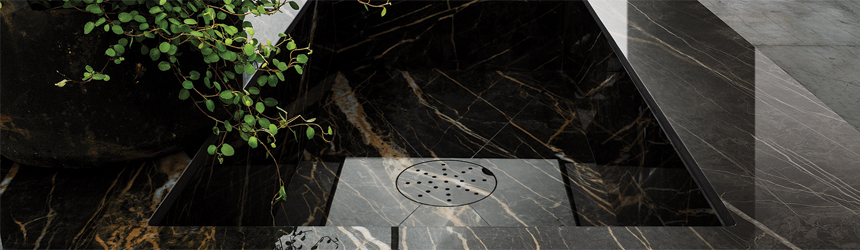
Above: The I Naturali series is available in 1000×3000 and 1620×3240 mm in over 30 color options. 75 percent of Laminam’s ceramic slabs are digitally printed with the Creadigit by System Ceramics, allowing the manufacturer to use the same materials with a variety of design options.

Founded in 2001, Laminam specializes in the production of large-size, minimum-thickness ceramic slabs for architecture, design, interiors, and furnishings. As one of the first companies to fully industrialize the ceramic manufacturing process, its surfaces are produced with cutting-edge machinery created by System Group, Laminam’s parent company.

Headquartered in Fiorano, Italy, its main factory is joined by two new production sites set to triple capacity. The Borgotaro, Italy facility is dedicated to 1,620×3,240 millimeter (mm) slabs while its Russian location exclusively handles 1,000×3,000 mm slabs.

“Extremely light and with excellent material properties, these large-size, minimum-thickness ceramic slabs are the natural choice for applications in architecture and furnishings,” says Michele Perozzi, operations director, Laminam.

With a catalog of over 140 surfaces, Laminam offers options designed to satisfy all tastes and styles with soft, natural colors and ultra-modern industrial, three-dimensional (3D) textures. It houses showrooms in Italy, Poland, and Russia that present an overview of the company’s main ceramic lines and its uses.

With a consolidated turnover of nearly 85 million in 2017 and a growth trend of 30 percent, Laminam exports to Europe, the Far East, the Gulf States, North America, and Russia. Its products are distributed in all five continents. “Laminam boasts an extensive portfolio of projects created all over the world, and has established a number of important partnerships, in particular with Japanese-based TOTO Ltd.,” shares Perozzi.

With this partnership, Laminam offers an innovative photocatalytic treatment, HYDROTECT. Developed by TOTO, it provides air purifying and self-cleaning properties. Ceramic slabs treated with HYDROTECT become an eco-compatible product able to generate chemical and biological reactions, with positive effects in terms of antibacterial power, reduction of pollutants, and self-cleaning surfaces. The process requires no electricity, energy, or renewal of compounds to maintain the reaction over time.

Ceramic Manufacturing
Laminam exclusively produces large-size, minimum-thickness ceramic slabs in two sizes. Its 1,000×3,000 mm slabs are available in three and 5.6 mm thicknesses for floor and vertical wall applications. Designed for horizontal surfaces in design and furniture, the 1,620×3,240 mm slabs are produced with 5.6, 12, and 20 mm thicknesses.

“In addition to traditional building construction, especially for ventilated facades, our materials are used by furniture manufacturers to produce tables and kitchen worktops,” explains Perozzi.

Five years ago, Laminam began using digital printing technologies to improve the visual quality and the natural effect of its ceramic textures. “We also wanted to increase the graphic variability of our products and simplify the production cycle,” he adds.

The manufacturer opted for the Creadigit by System Ceramics, a division of System Group, for its high resolution, speed, and unique precision for complex graphics. With speeds up to 70 meters per minute, the Creadigit is a lineless digital ceramic printer with eight color bars. It features an integrated belt washer, dust suction system, and stainless steel structure for durability against humidity and chemical components.

With the Creadigit, Laminam uses organic inks produced by Italian ceramic paint manufacturers. Its digital printers are controlled by System Group’s proprietary software as well as Adobe Photoshop for image processing. The ceramic finishing process is limited, with only an added protective enamel coating applied after printing to maximize longevity.

75 percent of Laminam’s ceramic slabs are digitally printed, allowing the manufacturer to use the same materials with a variety of design options. Compared to traditional manufacturing techniques, digital technology helps the company save time during line preparation and finishing, resulting in lower costs.

According to Perozzi, “the wide selection of Laminam textures is really appreciated on the market, ranging from natural and soft colors to ultra-modern, industrial, and 3D surfaces.” From an aesthetic point of view, he believes digital technology amplifies ceramic textures and variability, especially for large surfaces. “Digital printing allows us to obtain amazing effects.”

Despite its success producing digitally printed ceramics, Laminam is well aware of the growing competition in the market. Nowadays, Perozzi says most companies produce ceramic slabs and tiles with digital printing. “The competition with the other brands is played out in aesthetics and quality of the products.”

Natural Surfaces
In the last few years, Laminam observed growing demand for ceramic slabs that resemble natural surfaces such as marble, stone, and wood. Released in 2002, its I Naturali series explores this trend and is now the company’s bestseller.

“Its concept is a sort of virtual magnifying glass on the natural stone quarry that faithfully reproduces the technical essence and aesthetics of the surfaces from which it draws inspiration, revealing textures with high technological value,” shares Perozzi. “It is a unique collection that guarantees the same large-size outcome as the most commonly used natural materials.”

The I Naturali series is available in 1,000×3,000 and 1,620×3,240 mm in over 30 color options. Due to its extreme resistance and sophisticated style, the 1,000×3,000 mm slabs adapt to architecture and a variety of decorative interiors. The 1,620×3,240 mm size is designed for furnishing horizontal surfaces like table tops, kitchens, and bathroom worktops. “They offer a valid alternative to marble and stone materials, which entail steeper costs and a bigger environmental impact,” comments Perozzi.

Laminam ceramic slabs such as the I Naturali series consist of a natural material that’s 100 percent recyclable. The material is a result of sustainable technologies and a cutting-edge production process based on an exclusive compacting system for raw materials such as clay and feldspar.

With its HYDROTECT treatment, the I Naturali series is an ideal surface for contact with food. It’s often used to create kitchen counters and worktops due to its resistance against chemicals, deep abrasions, heat, fire, fungi, mildew, stains, and UV rays. “It acts as a hygienic antibacterial chopping board on which you can prepare food directly using knives, liquids, oils, wine, and hot pots and pans,” adds Perozzi.

Thanks to its technical performance, the series is also suitable for bathrooms, spas, or Turkish baths that require maximum hygiene and resistance. “The aesthetic virtues and large size offer a major artistic advantage, guaranteeing material continuity through the settings in sophisticated, natural shades,” comments Perozzi.

In addition to natural surfaces, Laminam also developed a ceramic portfolio in response to the increasing popularity for fabric and wallpaper. Designed to resemble silk, the Seta series is a line of large format porcelain panels available in five colors. It’s suitable for indoor applications including building sectors, interior design, shipbuilding, and structure panels.

“The Seta series represents the same shine of the oldest and finest fabrics to dress up indoor and outdoor environments in style and character,” offers Perozzi.

Sustainable Décor
Laminam uses digital technology to create a diverse ceramic offering that meets clients’ demands for innovation and quality. With its Creadigit printer and HYDROTECT treatment, the manufacturer continues to produce durable, digitally printed ceramic slabs for architecture, interior design, and home furnishings.

Sep2018, Industrial Print Magazine
Digital Print
Direct Shape Printing

Promotional and Practical

By Cassandra Balentine

Consumers are accustom to single-use solutions for their eating and drinking habits. However, environmental concerns have pushed many consumers and businesses to re-think these behaviors and seek alternative options for a more sustainable lifestyle. Industrial-grade digital printing technologies enable the economical production of custom-branded items like stainless steel water bottles and cups—making them more enticing to businesses and consumers.

There are several methods for decorating to reusable table and drinkware. More traditional methods include screen printing, pad printing, laser engraving, and heat transfer. However, the latest digital print technologies enable direct to shape or direct to object printing with inkjet, bringing the benefits of digital to a new group of products.

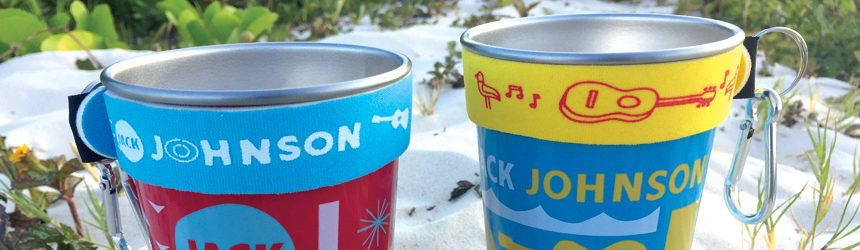
Above: Steelys Drinkware makes custom, zero-waste drinkware for festivals and events like the Jack Johnson Tour.

Custom and Sustainable
Founded in 2010 and based in a 5,000 square foot converted warehouse facility on the San Francisco, CA waterfront, Steelys Drinkware is a wholesale supplier of custom printed, reusable food-grade, stainless steel cups, bottles, straws, and food containers. The company’s objective is to minimize society’s consumption of single-use disposable goods. It is a wholesale business-to-business supplier, not a consumer product company. “You don’t find Steelys branded product in stores. Instead, we make them for others and we decorate them with their branding or messaging,” offers John Borg, founder/CEO, Steelys Drinkware.

The company designs and produces reusable steel cups and bottles that meet the highest standards for health, safety, sustainability, and corporate social responsibility. “Our products promote a healthy lifestyle, can be reused endlessly, and reduce landfill waste. Most are made from premium, food-grade stainless steel that is tested to be free from lead, phthalates, BPA, and other toxins. Steelys products can be reused for years, passed on to others, and are 100 percent recyclable at the end of their long lifecycle,” shares Borg.

Steelys Drinkware pioneered the use of refillable steel cups and bottles to minimize waste at events and venues. It has made custom, zero-waste drinkware for touring bands, non-profits, NGOs, governmental institutions, sustainability organizations, food and entertainment venues, and large-scale events across the country.

Among its customers are festivals and events like Afropunk Fest NY, Big Wonderful Denver, Bonnaroo Arts & Music Festival, Chicago Green Festival, Gaia Festival Laytonville, Health & Harmony Festival Santa Rosa, High Sierra Music Festival, Lightning in a Bottle Festival, Monterey Jazz Festival, Outside Lands Music Festival, Reggae on the River, Smorgasburg NY, SweetWater 420 Fest, SXSW, Tall Tree Music Festival, and the Telluride Fire Festival.

Touring bands and acts include Ben Harper, Bonnie Rait, Dave Matthews Band 2014 to 2018 Tour, Dawes, Dead & Co, Jack Johnson Tour, Jackson Browne, Keb Mo, Luke Bryant Tour, Marooon 5, and Pink.

Non-profit partners and customers Alliance for Sustainable Colorado, Clean Water Action, Commonwealth Club/Climate One, Midway Atoll, National Parks Foundation, National Parks Service, Ocean Conservancy, Plastic Pollution Coalition, Rainforest Action Network, REVERB / Sustainable Concerts Working Group, TED Conference, and The Sierra Club are also customers.

Its products are popular among corporations such as Alaska Airlines, Aspen Ski Company, Clean Power Finance, Consumer Reports, Disney, District Bicycles, Ecco, Electronic Arts, Equal Exchange, ESPN, Google, Marketo, Pivot TV, Skywalker Sound, Sun Run, The Northface, and Thule.

The company serves customers throughout the U.S. and also ships larger orders to European markets as well as Canada and Mexico.

Down to Business
Steelys Drinkware offers a range of products, including custom printed stainless steel cups, bottles, straws, and food containers. For customization, it utilizes several methods of printing, including screen printing, pad printing, laser engraving, and full-color digital printing.

The company gets a lot of referral business, and most orders start by people finding its website and filling out an order or quote request form. “Because each order is custom, we don’t just sell online. The process usually involves a series of emails, phone calls, and digital mock ups. Most of our work is done via email or follow up phone calls as needed. Once order details and budget is approved, we pre-bill the order, and put it in production once we receive payment,” says Borg.

Production Considerations
The company contracts out its print work, which is done through three facilities throughout the U.S., based in CA, MN, and NC. A handful of additional contract print facilities are called upon as needed.

While Steelys Drinkware has entertained the idea of bringing production work in house, it eventually determined it doesn’t make sense for its current business model. “It works out better for us to use the San Francisco office for sales, marketing, and samples, and farm out print production to third-party contract printers, who hold our blank inventory,” explains Borg. “Our model is working, so we intend to keep it going the same way. It is possible we could make better margin if we did the printing ourselves, but that would require a new facility, equipment, and employees, so we see no need to disrupt something that is already working. Plus we have great contract print partners,” he shares.

Custom orders are shipped out seven to ten days from pre-payment and approval of digital proofs, including freight time, which varies depending on where goods are shipping from and heading to.

While more traditional print methods like screen printing or pad printing are its most popular offerings—due to the flexibility, multi-color options, and affordability—the company also offers full-color digital printing.

About six years ago, it decided to add digital to its portfolio. “We had customers with full-color digital photos they wanted to print, or graphics with a lot of complex color gradations, which we could not print or would be cost prohibitive to print using conventional screen printing techniques,” points out Borg.

With digital printing capabilities, the company offers customers beautiful full-color photo-quality images, with color complexity, gradations, and complicated art files that could not normally be printed with conventional printing processes. “It is quite affordable. We have the option of printing on silver unpainted bottles or other colors, but we only print on white painted water bottles. The white base bottles provide a blank canvas, so the colors really pop,” suggests Borg.

He admits the company could probably amp up its full-color printing offering, but it is currently only available on a handful of different water bottles out of the more than 100 products carried. “In the grand scheme, it’s a fairly small percentage of our business. If we offered the full-color printing on more products, we could probably sell more of it. But for certain projects, full-color digital printing is the only option offered that adequately prints on the product,” he explains.

Protect and Print
Steelys Drinkware recently utilized full-color digital printing on custom water bottles for an environmental non-profit customer involved with communicating the impacts of climate change. It revolved around an informational campaign highlighting the impacts of global warming on the wild polar bear population.

The customer requested custom water bottles for distribution featuring a photograph of a polar bear on one side, and on the other side statistics about polar bears and the dangers they face as a result of climate change.

While the image of the polar bear did not include any dynamic colors—just a white polar bear standing on a sheet of ice, it featured extensive detail and gradations that could not be reproduced in any way other than full-color digital printing.

To achieve the level of detail and quality it was looking for, Steelys Drinkware embellished the photographic image so the silhouette provided contrast on the white bottle. “The image turned out beautiful, the customer was happy, and the bottles are part of a campaign currently underway to communicate the negative impacts of fossil fuel consumption and global climate change,” comments Borg.

Sustainable Goals
The sustainability movement is of major importance to Steelys Drinkware’s business philosophy—particularly minimizing plastic pollution and waste.
“Many of our clients are activist organizations looking to cut plastic use. We are constantly developing new products to address this issue. We were among the first U.S. suppliers of reusable steel straws and in the last year our sales in this area have exploded as various cities around the U.S. are introducing single-use plastic straw bans,” says Borg.

For the next phase of its business, it is in the process of developing different reusable cups, bottles, food containers, and accessories that its customers are requesting. “Our focus remains developing product solutions that minimize plastic waste. On a policy level, we are working with municipalities within CA who are creating legislation to ban plastic straws and minimize single-use plastic bottle and cup waste,” explains Borg. “While we are a product business, we are also driven by helping create positive change and are very committed to working with leaders in the sustainability movement.”

Digital Trends
Steelys Drinkware stands out with a strong portfolio of products and capabilities as well as a clear message of sustainability. With advancements in printing technologies, businesses offer high-quality solutions that meet a range of demands—all while focusing on core business goals aside from the manufacturing and production of the goods sold.

Sep2018, Industrial Print Magazine
Digital Print
Direct Shape Printing

A Cure for Digital

By Olivia Cahoon

Digital printing continues to make inroads into manufacturing settings due to advancements including improved UV LED curing systems. Updated features like faster curing speeds, modular designs, and advanced control processes enable efficiency in industrial-type applications.

Above: Honle UV LED curing solutions reach high UV intensities for sheetfed printing.

Manufacturing Environments
Several industries benefit from the use of UV LED systems as a result of recent advancements in lower power consumption, less downtime, reduced cost of ownership, and lower temperature curing.

These features stir interest in the technology as a whole, but also from a spectrum of manufacturers. “The technology itself requires less input power versus conventional UV—lowering utility costs,” explains Simon Whittle, VP of operations, American Ultraviolet. The company celebrates close to 20 years of creating UV curing solutions for processes that use UV-curable chemistries like inks, coatings, and adhesives.

In newer UV LED systems, while heat is generated and needs to be removed, less input power is required, resulting in a reduced amount of heat when compared to conventional systems. According to Whittle, manufacturing facilities that utilize conventional UV systems require make up air to replace the air exhausted through the system and ovens—further complicating the process. “Imagine the cost savings from not having to do that,” he says.

Manufacturers utilizing digital print technology are taking advantage. For example, double production speed is achieved with thick, heavily pigmented inks, but with heavy inks also comes the need for industrial curing. “The LEDs’ high-intensity UV-A rays penetrate thick ink coats better for more effective curing with improved adhesion, delivering faster speeds with silkscreen and opaque white coatings,” offers David Lyus, sales manager, specialist UV systems, GEW (EC) Limited—a designer and manufacturer of UV LED curing systems for printing, coating, and converting applications.

According to Pamela Lee, senior product manager, OmniCure, Excelitas Technologies, the digital printing industry is arguably one of the more mature segments of the print market, with wider spread integration of UV LED curing solutions when compared to other industries. “These advancements in UV LED curing technologies help provide performance advantages, productivity enhancements, and environmental benefits.” Excelitas provides optoelectronics and electronic systems to original equipment manufacturers.

UV curing solutions migrated from small format applications and spot curing to larger area systems due to improvements in optical performance, LED efficiency, and costs. With these enhancements, Lee believes more economical UV LED solutions are available offering increased curing/operational speeds and support for a wider range of materials. She offers, “from an industrial print standpoint, it translates to higher power systems that can support larger print areas, while maintaining or increasing print speeds at a more economical cost.”

This is observed in wide format inkjet printing where UV LED is increasingly applied. “Demand for high output UV LED curing lights is rising among inkjet printer manufacturers worldwide to meet user demand for higher productivity and faster printing,” reveals Akira Taguchi, manager, EP devices development department, printing device R&D division, corporate printing device group, Kyocera Corporation, which is a supplier of electronic devices, semiconductors, printers, copiers, mobile phones, solar power generating systems, cutting tools, and industrial components.

In sheetfed printing processes, advancements in UV LED curing enables the ability to print on temperature-sensitive materials due to the low heat radiation of LEDs and automatic on/off controls without standby time or shortage of service life. Dieter Stirner, sales director, Honle Group, says automatic on/off controls are consciously used for sheetfed printing applications in a process called triggering. The Honle Group is based in Germany, but its U.S. partner Honle UV America, Inc. offers a full line of UV and LED equipment, sales, service, and support for North and South America.

Triggering occurs during curing, when LEDs are switched off between single sheets for a short interruption. “Though it might take only a blink of a moment, the LED service life can be extended over the years,” comments Stirner.

Consequently, triggering also increases the energy efficiency of LEDs, which according to Stirner, is decisively higher than only some years ago thanks to developments by LED manufacturers. Another important advantage of UV LED curing in digital printing is the possibility of format shut off. “By shutting off single LED modules, the irradiation widths can easily be adapted to the printing format.”

New Features
Some of the newest features on UV LED curing systems include higher UV intensity, faster curing speeds, and lighter, more compact devices. Together, these advancements improve the production process for manufacturers using digital printing practices.

Dimension & Weight
In recent years, UV LED curing systems are smaller and more lightweight due to higher efficiency UV LEDs now available in conjunction with advancements in thermal management technology. “The physical size of curing systems can be optimized for space-constrained applications, without compromising performance,” offers Lee. “Smaller mechanical form factors can then enable the integration of UV curing solutions into a wider range of applications.”

However, achieving a smaller, lighter curing device is not simple. According to Taguchi, one of the biggest challenges is maximizing UV intensity while minimizing the total system’s size. Kyocera’s approach to increasing UV intensity is to mount the LED elements in a high-density array. By optimizing a module design and Kyocera’s thermally conductive ceramic substrate, the company increases output while also reducing size.

While UV LED devices are lighter and more compact, it remains uncertain if they will continue to decrease in size. “I don’t think they are going to get much smaller than they are, but never say never,” comments Whittle. This is partly due to the fact that UV LED systems require a cooling device to quickly remove heat, which also takes a considerable amount of space to work efficiently.

Air & Liquid Cooling
At the junction point of the LED in UV curing devices, heat is generated and needs to be removed. LED performance, reliability, and lifetime are dependent on how effectively this heat is dissipated. “As such, thermal management is a crucial component in a UV LED system design,” comments Lee.

Air and liquid cooling are two methods of thermal management used to remove heat from the backside of the LED or LED array.

Liquid cooling is primarily used in applications where high power densities, small form factors, and large curing areas are required. “Water cooled solutions can more effectively manage low junction temperatures, but this comes at the cost of more complex integration and support infrastructures for the chillers and water pipes/connections,” says Lee.

This method is typically more expensive to implement due to additional materials, like a chiller, which removes the heat from the liquid before it recirculates back to the LED. However, Whittle points out that liquid cooling LED assemblies are typically smaller because no fans or heat sink are required, just piping for the liquid to pass through. “Liquid cooling is more efficient because it allows the junction temperature to be lowered and in theory more output from the LED,” he adds.

According to Lyus, liquid cooling is predominantly required to meet the needs of demanding industrial processes because water has a much higher specific heat capacity than air. “Our customers’ high-speed applications require a high dose and intensity of UV in a small space,” he offers.

On the other hand, air cooling is more cost effective and enables systems to be easily integrated due to reduced power consumption and minimized initial equipment costs. These units are standalone and do not require external infrastructure support. While the peak performance of air cooled UV LED systems is not as high as water cooled solutions, Lee says recent advancements in LED technology have made the output from air cooled systems more than sufficient for most curing applications.

Several air cooled UV LED systems have an output of up to 16 watts, which according to Stirner, makes for a viable alternative to liquid cooling. “This is much higher as what they could reach some time ago and about the same of what early water cooled systems could reach.” However, he notes that all printing processes requiring a very high intensity might benefit from a water cooled system as they reach higher intensities.

Additionally, air cooling systems require a heat sink and fans to effectively pull the heat away from the LED junction. According to Whittle, this adds extra weight, space, and potentially some fan noise, which is important for print providers to consider if seeking the most lightweight and compact system available.

Scalability
UV LED curing solutions are designed with scalability in mind, which typically means adding more modules for wider widths and adjusting the LED array design for improved efficiency.

Scalability is achieved both internally via the electro-mechanical architectures and LED array design and externally through LED heads that can be stacked side by side to increase cure width, says Lee. “Having the ability to scale a solution whether it is in cure size or the speed of application allows for customers to have flexibility for growth.”

UV LED device manufacturers develop LED heads to be modular, allowing for stacking or adding wider widths and higher UV. However, Whittle cautions that power supplies and cable sizes may be the limiting factor if intending to run them off one cable system. “Most power supplies are 48 VDC for LEDs so for 3,000 watts of input power, the electrical distribution/cable needs to be able to handle over 60 amps or you need multiple cables for one power supply to multiple heads.”

According to Taguchi, a connectable 80 mm unit supports diverse applications by allowing control of the irradiation width from 80 to 1,600 mm. “This makes it ideal for diverse printing applications and media—from fine characters, figures, and barcodes smaller than 100 mm to printing on large scale building materials and films up to 1,600 mm.”

UV Intensity
Performance optimizations result in higher output UV LED curing devices that offer more power and higher peak intensities. Lee offers, “these improvements in hardware capabilities in conjunction with the enhancements in formulations enables higher speed curing and thus faster process speeds.”

While improvements are made to UV LED hardware for higher UV intensities, optimized focusing optics and improved ink reactivity also affect curing results. According to Stirner, recent developments for focusing optics have resulted in very high intensities that can be reached at greater distances between the curing unit and substrate. “On the whole, one can say that the higher degree of efficiency leads to a permanent upgrading of UV LED systems.”

Despite ongoing efforts for higher UV intensity, the market may have hit a point where more doesn’t produce a proportional response. “They produce so much intensity at one wavelength that it’s too much for the photo-initiator to absorb all the photons regardless of how high the speed is,” explains Whittle. Photo-initiators absorb photons based on the ability to absorb in the wavelength and the formula’s concentration. “Increasing the concentration of the initiator can add significant cost and have adverse effects on the finished properties.”

Additional Advancements
In addition to UV intensity, cooling mechanisms, and smaller dimensions, UV LED curing systems are designed with hybrid capabilities and patented control processes.

Hybrid UV curing systems are available for those that prefer conventional UV mercury arc lamps but also want the option of LED. Cassette-based hybrid devices automatically recognize which cassette type is installed in the machine and adjust to provide the correct power type. Available on the same print unit, Lyus says these systems use the same lamp head casing, power supply, cables, and control, as suitable inks or coatings become available.

“Many LED systems are sold with mercury lamp capability and customers regularly alternate between the two to optimize curing to suit specific production runs,” he explains. With a full hybrid UV curing solution, like the GEW RHINO ArcLED electronic power supply, Lyus says print providers can provide either a conventional UV output for flexography or a high-intensity output often needed for inkjet printing. Additionally, the RHINO power supply unit can accommodate iron doped lamps sometimes used in inkjet processes where inks need a different UV wavelength for effective curing.

“The RHINO power supply streamlines all of the lamp head technologies that inkjet printers may need, depending on their ink set and process. For machinery manufacturers, it offers one supply source, one electrical integration, one control interface, and can reliably and robustly supply UV power for a range of digital applications,” offers Lyus.

Newer UV devices are also now designed with patented control processes to address individual UV LED modules. By adjusting the output of each segment, Lee says exceptional uniformity over the entire curing area can be achieved, while empowering customers with the ability to customize outputs with tighter process controls.

In addition to control processes, Taguchi says new communication functions allow users to track the status of UV LED curing lights, including LED module temperature, fan operating time, and LED drive current. Select systems like Kyocera’s also offer warning notifications when it’s time to replace filters or LEDs.

Rather than new features, Whittle believes there is more effort put into LED system controls and system status information, useful for production runs and maintenance. “Manufacturers have created enough higher intensity modules in different configurations that it’s time to start working on understanding how it all comes together—equipment, chemistry, and process to manufacture finished products effectively.”

Needs & Improvements
The use of UV LED systems in manufacturing environments is still a relatively new concept. Despite recent advancements, improvements remain for successful implementation.

As it is in any industry, reductions in equipment costs will further improve the adoption of UV LED curing systems in a variety of markets. From a materials standpoint, Lee believes additional enhancements in ink formulations with a wider range of cost-effective UV LED curable options will help better support the integration of these solutions. “As the performance of UV LED curing systems continue to increase, even faster print speeds will be supported and more importantly, acquisitions costs will go down.”

Although UV inks for LED curing are becoming common in the digital and analog printing markets, UV inks for conventional curing lamps are still widely used. “Current UV LED curing systems are still not fully capable of curing inks designed for conventional lamps,” offers Taguchi. As a result, the industry is in need of UV LED curing lights with the capability to cure any type of ink.

Aside from inks and materials, concerns are present for the chemistry and process of UV LED curing. It’s important to understand all the variables involved in implementing a UV LED process including the limitations that may require some adjunct to the LED technology to get the process where it needs to be. “Surface cure seems to be a limiting factor for LEDs, the better surface cure initiators work at the shorter wavelengths,” adds Whittle.

UV curing uses multiple wavelengths that depend on process requirements and travel at different distances though cured substrates. UV ranges include UV-A, UV-B, UV-C, and UV-V. While UV-A rays are capable of penetrating thick ink, developing a UV-C light source currently poses a challenge. “These remain an expensive and complex solution to a simple problem,” admits Lyus. “Mercury lamps still deliver a relatively high dosage of UV-C energy cost effectively, and GEW can now measure this output to ensure consistent irradiance, both across the width of the press and over time.”

Advanced Curing
As UV LED curing systems continue to improve with new features designed for lighter weights and improved scalability, these changes affect manufacturing environments implementing digital printing practices.

Sep2018, Industrial Print Magazine
Curing
Digital Print
UV LED

Seamless Hospitality

By Olivia Cahoon

For textile printing, digital print technology is a unique alternative to traditional equipment like rotary screen machines. It offers a cost-effective solution for producing custom, short runs of fabric like cotton, polyester, and even leather. An investment in digital offers an opportunity to enter new markets while providing existing clients with value.

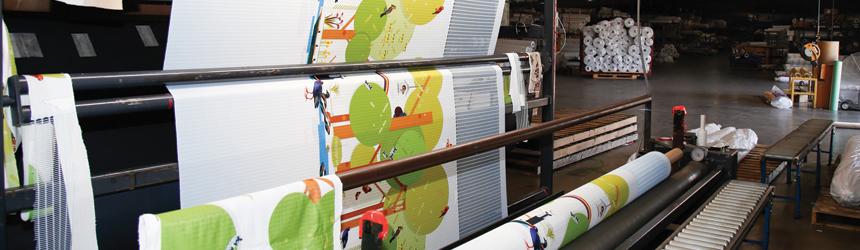
Above: Suntex Printing of Woodruff, SC printed on Tana-Tex’s proprietary mesh base cloth using a Mimaki TS500P-3200 sublimation printer. The finished product was used as privacy curtains in pediatric healthcare facilities. The client, Tana-Tex, develops specialty fabrics for healthcare applications.

Printing to Perfection
Suntex Printing, Inc. began in 1995 as a fabric transfer service for the hospitality market. While it still offers transfer services, it also provides design, digital printing, fabric treatments, large format printing, and small yardage orders out of a 75,000 square foot location in Woodruff, SC with 20 employees.

When the company started, customers purchased printed transfer paper and fabric, which was shipped for a commission fee to Suntex Printing’s 50,000 square foot facility. The print provider primarily served the East and West coast with 15 employees. Finished products included bedspreads, draperies, and shower curtains for hotel, industrial, and healthcare.

“The hospitality industry would create designs, which were printed with disperse inks by offset means to transfer paper,” says Tiffany Dill, COO, Suntex Printing. At the time, the print provider used multiple 135-inch wide heat transfer calendars.

Suntex Printing’s market share grew fast and soon it transferred 15,000 to 20,000 yards per day. In the mid 2000’s, Dill noticed a drastic change in the market caused by the unfair trade acts with China and Mexico. “The American textile industry was devasted and over 400,000 jobs were lost in just a few years. Large transfer orders went to offshore companies and we needed to find another solution to survive,” she explains.

Soon after, the company investigated opportunities for small yardage orders used in sample rooms, catalogs, and orders too small to fill a shipping container. In 2009, Suntex Printing partnered with Sawgrass Inc. and invested in a Mimaki USA, Inc. JV33-160 printer, Sawgrass ink, ErgoSoft RIP software, and Beaver Paper & Graphic Media, Inc. transfer paper.

The Mimaki JV33-160 printer offers a 63.4-inch width capability with up to 1,440 dpi. It features a triple stage intelligent heater that automatically heats media to the appropriate temperature followed by a post heater that quickens drying time. It’s available in four- or six-color mode and prints up to 193.75 square feet per hour.

Pleased with the printer’s performance, the company continued adding Mimaki devices to its portfolio as order requests rose. As they became more familiar with digital, Suntex Printing’s customers’ began to appreciate the technology even more. “After they saw the quality, turnaround times, and ease of ordering, they slowly transitioned to printing complete productions,” explains Dill.

Worldwide Services
Today, Suntex Printing uses several Mimaki 64-inch digital printers and recently added the Mimaki JV5-320DS—a superwide direct and dye-sublimation transfer printer. With an investment in digital printing, its capacity is currently 3,200 linear yards per day with 80 percent of its work considered digitally printed textile applications.

The print provider offers a variety of services for textiles including fabric treatments, five styles of stocked blockout fabric, fabric sourcing, and printing to cotton, leather, and vinyl. Suntex Printing produces backdrops, bedspreads and bed runners, barstools, carpet, curtains, fabric and vinyl upholstery, headboards, large soft signage, pillows, privacy curtains, roller shades, shower curtains, tablecloths, theater curtains, and offers specialty printing on substrates like wood, stone, and plexiglass. Its services are available to Bangkok, Dubai, New Zealand, Singapore, and the U.S.

For fabric printing, Suntex Printing relies on Mimaki inks for compatibility, quality, and low cost; ErgoSoft RIP software, and transfer paper from Neenah Coldenhove for reduced ink consumption. The company offers single- or double-sided fabric printing for widths from 45 to 135 inches in blackout, dimmer, non-woven, polyester, poly/cotton blends, shear, and woven synthetics.

In 2014, Suntex Printing added an additional company, Coloronik, to pursue different markets and materials like acrylic, glass, leather, and vinyl. Coloronik uses a Mimaki JFX500-2131 flatbed and several direct-to-fabric printers for acoustic panels, acrylic ceiling tiles, ceramic tiles, custom t-shirts, decorative light panels, fine leathers, leather upholstery, LED backlit prints, outdoor banners, and window graphics. Recently, Dill says the company added pigment inks to print cotton, silk, and other natural fibers.

For digitally printed textile applications, Dill notices many trends including large designs not limited to traditional repeat screen sizes, gradients/ombre, watercolor paintings turned into digital print files, denim textures on blackout fabric, and double-sided curtains. With these in mind, Suntex Printing aims to provide the cost-effective and high-quality digitally printed textile solutions.

Pediatric Privacy Curtains
Recently, repeat customer Tana-Tex Inc. in Chicago, IL approached Suntex Printing for seamless privacy curtains used in pediatric healthcare facilities. Tana-Tex develops specialty fabrics for healthcare applications that are sold domestically and internationally for trade only. The client selected its in-house base cloth for the privacy curtains.

“We manufacture a proprietary integral mesh base cloth that offers twice the durability as a typical privacy curtain fabric,” says Michael Cook, president, Tana-Tex. “Digital print design and capacity offers a wider range of color, repeat, scale, and composition options that elevate our design options beyond the typical—allowing us nearly endless creative license.”

Tana-Tex requested 24,300 square feet of seamless privacy curtains printed on a Mimaki TS500P-3200 3.2-meter sublimation printer using OEM inks. According to Cook, the absence of vertical and horizontal seams on the privacy curtains creates a curtain with greater dimensional stability and less opportunity to harbor microbes. He adds, “print production is virtually flawless once a color or pattern standard is approved. Suntex Printing’s knowledgeable staff and fast turnaround times meet today’s fast paced expectations.”

The printed curtains featured cartoon images of birds, hot air balloons, rainbows, and rivers. Cook says the bright colors and whimsical content are a fun departure from Tana-Tex’s typical pattern work. “Digital printing allowed us to create two related patterns—the front is more active and is intended as the visitor side while the patient side is more serene.”

Due to a long sales cycle in the architectural and design specifications market, concept to installation was approximately one year. Each curtain was four yards in length at 900 yards total. The final job consisted of 225 curtains.

Tana-Tex was pleased with the final privacy curtains and continues to work with Suntex Printing. Cook offers, “this pattern work on a privacy curtain lifts the spirits of patients, visitors, and staff. The power of good design combined with exceptional print range and quality positively affects the healthcare interior.”

Design As You Please
Digital print technology presents print providers and fabric manufacturers with a variety of design possibilities and fast turnaround for textiles. With its Mimaki printers, Suntex Printing continues to keep clients satisfied and expand its digital textile offering.

Sep2018, Industrial Print Magazine
Digital Print
Textiles