To Chicago

By Industrial Print Staff

The Association for Print Technologies (APTech), formerly known as NPES, defines its organization as a purpose-driven supporter of the entire event, PRINT, is held this Fall from September 30 to October 2, 2018 at McCormick Place South in Chicago, IL. As an attendee, not only can you visit the vendors on the show floor, but experience networking opportunities with peers as well as partake in seminars.

We’ve compiled some of the vendors exhibiting at the show. Here, they share new products or services and existing offerings available in their booths.

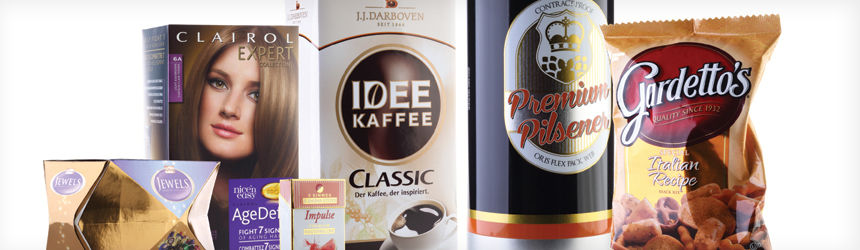
Above: CGS-ORIS provides demonstrations of its packaging software trio in booth 2203.

Benford UV, booth 130, displays its latest dual UV technology. It incorporates LED, eco, and conventional UV and cures the latest low-energy UV inks and coatings, while still curing traditional UV products. With some printers using conventional drying methods like spray powder to dry inks and coatings, UV-curing is an alternative that offers quicker turnaround, saves time, opens more print opportunities, and provides better quality print.

Canon U.S.A., booth 2400, showcases the advancements it is making to push the boundaries in the printing market through its broad portfolio of innovative solutions. At the show, Canon U.S.A. highlights printing solutions from the company’s extensive lineup, including the Océ Colorado 1640. Other products and solutions on display include the latest imagePRESS, imagePROGRAF, and PRISMA products.

CGS-ORIS, booth 2203, provides complete color solutions for all sectors of the industry, ensuring consistent colors on any media. During PRINT 18, look forward to demonstrations of the packaging trio—ORIS CxF Toolbox, iC3D, and ORIS Flex Pack. This all-in-one prototyping system provides complete proofing capabilities by combining 3D visualization and physical prototyping, including spot varnishes and cold foils. It also showcases ORIS X Gamut, expanded gamut color management for the latest expanded gamut presses.

Challenge Machinery Company (The), booth 815, is an American manufacturer featuring a diverse line of print finishing equipment including paper cutters from 15 to 62 inches, single- and three-knife fully automated book trimmers, paper drills, joggers, cornering machines, stock trucks, padding presses, and other bindery equipment.

Colter & Peterson, booth 1607, features new finishing equipment designed to handle a wide variety of substrates. North America’s largest independent distributor of paper cutters demonstrates a 45-inch SABER S115 and 31.5-inch PRISM P80 paper cutters. These popular brand lines are equipped with the time-saving Microcut automated electronics package. A new PRISM jogger that helps boost productivity and facilitates ease of use is also showcased.

Document Data Solutions (DDS), booth 824, demonstrates its Fuji-Samba based FS-1200 inkjet print system. The FS-1200 expands DDS’ existing color and monochrome inkjet technology from HP, Kyocera, and Ricoh. Additionally, the FS-1200 supports dye, pigment, UV-curable, and latex inks for greater flexibility. Couple this with the FS-1200’s scalable print widths of 1.7 to 27 inches in a single print bar. What ties these divergent print technologies together is the DDS Universal Controller. It allows clients to continue using existing workflows like .csv, IJPDS, and PDF. Don’t have an existing workflow? DDS offers its own proprietary workflow or it can create one for you.

Duplo USA, booth 3004, exhibits the DDC-810 Raised Spot UV Coater along with a range of finishing solutions including slitter/cutter/creasers, bookletmakers, die cutters, perfect binders, and tabletop folders. Join the company in its booth for live presentations and real job demonstrations with a focus on streamlining workflows and increasing profitability with print embellishment using Duplo devices.

Epson, booth 3121, highlights the new SureColor T5170 36-inch wireless printer that offers fast, precise, and reliable printing with a compact, clean floor-standing design. The SC-T5170 produces accurate, A1/D-size prints in 31 seconds. Whether printing from a roll or the Auto Sheet Feeder, the 4.3-inch color touchscreen simplifies print tasks. UltraChrome XD2 pigment inks deliver durable, vibrant prints. Integrated wireless and WiFi Direct connectivity allow for easily printing from tablets and smartphones, from virtually anywhere in the office.

Graphtec America, booth 3534, is a leader in cutting and finishing technology. Highlights at PRINT 18 include the Optima V250 4×8-foot digital flatbed cutter, FCX Series flatbeds, and High-Performance FC8600 Series roll-feed cutters. From delicate films to ¾-inch PVC, Graphtec has a solution for every cut.

GTI Graphic Technology, Inc., booth 312, features its family of Graphiclite D50 products, which includes desktop viewers, viewing stations with rolling floor stands, large format viewing solutions, and soft proofing systems. All products comply with ISO 3664:2009, the international standard for viewing in graphic technology and photographic conditions.

Heraeus Noblelight America, booth 2752, offers individual application-focused UV and IR solutions for cost and energy efficient processes. The company provides high power UV solutions, which enhance speed and stability of the curing process in the printing industry. Customers benefit from the entire UV portfolio, encompassing a spectrum of technology—system solutions with standard microwave-powered lamps, medium pressure lamps, UVC cure systems, or innovative UV LEDs.

MBM Corporation, booth 3200, debuts the VRCut ready Triumph cutters. Triumph models with Lytrod’s new VRCut software, which automates the operator workflow by creating an efficient cutting process from start to finish allowing operators the ability to cut with confidence. MBM also demonstrates the Aerocut Prime and Velocity with Lytrod Intellicut software and the Aerocut NanoPLUS with Lytrod VisionFocus software, as well as a new bookletmaker, trimmer, and several folders.

Mimaki USA, Inc., booth 2004, invites attendees to meet knowledgeable industry experts and experience hands-on demonstrations with its new UCJV Series printers, along with some of the most popular printers in sign and graphics, textile, and industrial.

Rollem, booth 1423, showcases finishing automation with two die cutters, slitters, and kiss cutting demonstrations. Only at PRINT 18 will visitors see the new InsigniaX3 B2 large format die cutter showing a 30 pt. ID mailer demonstration plus the Insignia6, featuring complete finishing of presentation folders—die cut, scoring, waste stripping, and inline folding and gluing. Rollem’s Jetstream features 29×20-inch bi-directional slitting, scoring, and perforating of a luxury brochure plus automated postcard slitting and kiss cutting of pressure-sensitive materials.

TEC Lighting Inc., booth 2229, is a world leader in the design, manufacture, and distribution of UV coaters, UV equipment, and special energy sources. It celebrates 100 years of combined experience in UV-curing technology. The company’s flexible approach to engineering, problem solving, and development of processes make them an ideal partner for curing applications.

THERM-O-TYPE, booth 3805, demonstrates the new Glue-Tech sheet laminating machine as well as the RAS-mc right angle slitter, RDC-Flex rotary die cutter, Zip-TS2L cutter/slitter/creaser, foil fusing equipment, the NSF Excel with inline waste stripping attachment, and the new NSF Ultra foil stamping/embossing/die cutting press.

We look forward to visiting Chicago and seeing what PRINT 18 has to offer. Visit us in booth 4042 and be sure to pick up copies of our September and October issues.

Sep2018, Industrial Print Magazine
3D
Digital Print
Finishing
Inkjet

Defining Industrial Print

By Industrial Print Staff

The Mack Brooks Exhibition Group held its InPrint USA Industrial Inkjet Conference in Chicago, IL, May 1 to 2, 2018 at the Palmer House, a Hilton Hotel. The organization’s goal is to inform, inspire, and educate. Co-founders Frazer Chesterman and Marcus Timson led the event with opening remarks that addressed the growing popularity of inkjet printing in manufacturing settings and the need to educate potential users on its capabilities. Advancements in printheads, ink chemistry, and single-pass technology make digital printing a viable option in many manufacturing environments.

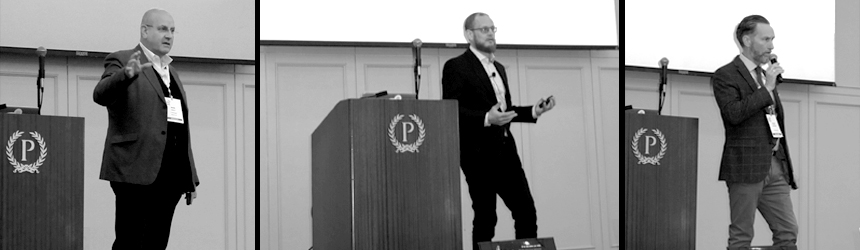
Above: Mark Hanley, president, I.T. Strategies, held a presentation on industrial printing. Co founders Frazer Chesterman and Marcus Timson led the InPrint USA Industrial Inkjet Conference with opening remarks addressing the growing popularity of inkjet printing in manufacturing settings and the need to educate potential users on its capabilities.

Industrial Continues to Be Defined
Timson took the time to define industrial print. Still in its infancy, there are varied points of view on what it entails. For InPrint, industrial print is print part of the manufacturing process, whether functional, decorative, or packaging.

Mark Hanley, president, I.T. Strategies, furthered Timson’s definition of industrial printing during his presentation. It is a product that is manufactured or semi-manufactured that is also printed. Hanley stressed that print is only part of the manufacturing process in this instance.

Digital Print in Automotive
A portion of the conference included case studies of digital printing in manufacturing settings. For example, Steven Calov, Omnifire 4D product manager, Heidelberg USA, shared the story of Ritzi Automotive, a 100 year old company based in Germany. Working with Mini Cooper, it prints on the interior ring of the car’s speedometer. When pad and screen printing didn’t work, it turned to digital.

Two years into the digital process, which while fruitful was labor intensive, Mini Cooper increased volume. Ritzi knew it was time to move onto a more industrial printer. At the InPrint USA trade show in Orlando, FL in 2017 it happened upon Heidelberg, and more specifically the Heidelberg Omnifire 1000. The 4D direct to shape printer can print on round, cylindrical objects at 39x39x39 inches.

Ritzi took the plunge and implemented it into its production facilities, specifically using it for Mini Cooper. What was taking 25 minutes to print on the old digital device now took six minutes with the Omnifire 1000. Increased labor savings per shift was the result of one touch point instead of multiple. Mini Cooper’s capacity and deadlines were met.

While five percent of what Ritzi does today in house involves digital printing, the company sees potential in the technology, with a long-term goal of 25 percent of its work involving digital print. The Omnifire 1000 provides opportunity for further business beyond Mini Cooper as well.

Direct to Shape
Direct to shape printing was a focus at the conference. Ron Gilboa, group director, InfoTrends’ production technology advisory service, Keypoint Intelligence, addressed it in his talk. He identified two segments this hardware serves—high-end production in large volumes and smaller niche products. Where smaller niche products might involve trinkets like key rings or luggage tags, high-end production of bottles and cans is where large volume comes in.

Printing direct to bottles and cans presents a huge opportunity for manufacturers. Jim Lambert, VP of digital sales – ink and hardware, INX International, furthered the point in his presentation.

Looking Ahead
InPrint USA is slated to follow up its Orlando 2017 trade show with the event moving to Louisville, KY in 2019. Held April 9 to 11 at the Kentucky International Convention Center, we hope to see you there.

Sep2018, Industrial Print Magazine
Digital Print
Inkjet

From Fabrication to Decoration

By Cassandra Balentine

Customization is a major trend across all industries. Architects for both commercial and residential projects demand unique applications. Glass decoration is one solution, which today is achieved with digital ceramic printers that enable direct to glass printing.

Several printer manufacturers offer solutions targeting the ability to print directly to glass, presenting an opportunity for those that work with the substrate to offer custom printed solutions from home décor to exterior facades.

Established in 1990, Insulite Glass Company is headquartered in Olathe, KS and operates an additional facility in St. Louis, MO. In total, the company employs 170 workers out of approximately 140,000 square feet of production space. Its fleet of trucks makes daily deliveries throughout the Midwest and is capable of servicing projects nationwide.

Insulite Glass is a leader in automated architectural flat glass fabrication offering a variety of glass products, including insulating glass, heat-treated glass, spandrel glass, laminated glass, glass entrances, shower doors, FireLite products, and Digital Glass Printing (DGP).

Above: A Dip-Tech GlassJet PRO printer helped Olathe, KS-based Insulite Glass create Whole Person Healthcare’s Logo on a new medical building.

Decorative Glass Services
Decorative glass is appealing to both commercial and residential customers. “These projects include everything from backsplashes, countertops, hand railings, shower enclosures, and custom art glass to whole building facades,” says Kurt Hartman, DGP specialist, Insulite Glass.

Insulite Glass began offering DGP in 2012 with its purchase of a ceramic frit digital inkjet printer from Dip-Tech, a Ferro Company. The printer was the fourth of its kind in North America. Today there are more than 40 Dip-Tech machines in North America, according to Hartman. “Despite the increase in DGP suppliers/competitors, our level of business continues to grow. The market demand for DGP is growing exponentially as more architects become familiar with its possibilities and incorporate custom decorative glass into exterior and interior building plans,” he shares.

An Eye on Digital
Many commercial glass installations require a single color pattern of dots, lines, or holes added to the substrate for the purpose of managing glare, solar heat gain, and u-values—which improve the overall performance of insulated glass units (IGU). These patterns are traditionally silkscreened. While having silkscreen capabilities in house had been on Insulite Glass’ wish list for some time, the cost wasn’t justifiable.

About five years ago, Insulite Glass embarked on its digital journey when its president was introduced to Dip-Tech at a trade show and realized that with the purchase of a single machine it could expand product offerings and capabilities to meet the demands of customers and architects. With the implementation, the company now has options similar to traditional silkscreen patterns and introduced custom decorative glass.

Insulite Glass uses a Dip-Tech GlassJet PRO printer. “The ability to print nearly any design makes the technology very appealing,” admits Hartman. The printer was able to pick up where traditional silkscreen left off and advance it to the next level.

Benefits and Challenges
When Insulite Glass first obtained the Dip-Tech GlassJet PRO, there was a push to spread the word on the benefits of direct to glass digital printing as opposed to using applied films.

Permanency is one of the biggest advantages of the digital ceramic printing process. While films can be picked off, fade, or release gasses in the airspace that over time can fog the IGU; the ink is made of microscopic ceramic—glass—pieces that are fire fused into the glass, similar to glazing pottery. During heat treating the surface of the glass softens and the frit subsides into the glass. In other words, it’s stain glass on a microscopic level. “I tell customers, if they’re alright with their decorative glass lasting as long as the stained glass seen in the Vatican, they’re good,” explains Hartman.

He says DGP provides unmatched quality and durability for architectural glass. “During the heat treating process, ceramic inks are fused into the glass itself, providing powerful resistance to scratching, acid, UV light, and weather to ensure the design withstands the test of time.”
The company utilizes both full-color ceramic frit inks and translucent/etch inks. Both inks are permanent due to the heat treating process after printing.

Due to the composition of the ink, digitally printed glass can be insulated with the printed surface in the air space of an IGU without causing any issues. The ceramic frit can also be used on the outside surface because of its resistance to the elements, explains Hartman.

“When placed against the interlayer in laminated applications, there is no loss of adhesion between the interlayer and fritted glass,” he offers.

One challenge of printing with ceramic inks as opposed to UV- or acrylic-based solutions is the limited color gamut. “Because ceramic frit inks are inorganic compounds, it’s hard to get fluorescent and metallic ink colors,” admits Hartman.

Magenta is one example of a hard-to-obtain color. “This is because the elements you would need to produce the color are gold and cadmium, which is not something approved to work with in the U.S.” However, he believes change is on the horizon, and that it’s just a matter of time before the ability to hit these new colors is achieved.

The company utilizes the same ceramic printer it started with, but is in the market to upgrade. Hartman says the past five years have brought advancements in terms of speed, the number of printheads supported, and smaller nozzle size to improve dpi for true high-definition printing.

Application Focused
Insulite Glass recently printed a company logo for the exterior glass wall of a medical building. Whole Person Healthcare’s logo features colorful, overlapping rings. The glass installation measures approximately 36×87 feet, comprised of 91 digitally printed and laminated glass panels.

The building is positioned within a mile of a major interstate making the curtain wall an attention-grabbing feature that is backlit with LED panels at night.

To achieve the color matching and vibrancy of the brand and ensure an appealing aesthetic from near and far, the print is comprised of three colors of dots—red, green, and blue. The size, frequency, and combination of the different RGB dots is interpreted by the human eye as the countless, brand-specific custom colors.

Low-iron glass combined with a white polyvinyl butyral interlayer was used to achieve the ideal translucency required by the customer. Each glass panel contains flat-ground edges, which reduce light refraction on glass corners and four holes for spider fittings.
The architect envisioned the custom glass signage from the onset and worked it into its original design and budget. Fortunately the client and designer also understood the importance of working in concert with Insulite Glass DGP throughout the entire process—from initial drawings, samples, mockups, and LED adjustments to production and installation.

Managing the progress, approvals, and schedule of the materials, Insulite Glass project managers assisted the owner, design team, and customer. The glazing subcontractor and general contractor ensured on-time completion of the project.

On the Horizon
Insulite Glass continues to focus on growth while providing customers with the best service and products available. The company’s early adoption of digital printing technologies for glass applications enables it to control costs and turnaround times on previously outsourced silkscreen work, and open new and exciting product lines with the ability to offer high-value custom glass decoration services on site.

Apr2018, Industrial Print Magazine

A Perfect Fit

By Olivia Cahoon

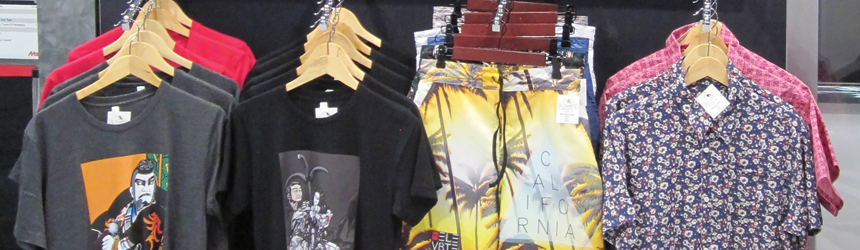
Garment manufacturers implement digital textile printing to offer a faster time to market and shorter production cycles. The ability to produce products on demand allows manufacturers to reduce inventory and related challenges like overstock or pre-decorated products.

“In the age of fast fashion, where styles change quickly, digital printing allows for shorter runs to meet garment industry manufacturers’ various needs and deadlines,” says Lily Hunter, product manager, textiles and consumables, Roland DGA Corporation. This is beneficial for customizing and personalizing apparel quickly and cost efficiently.

Above: Mimaki monitors new and/or improved equipment, jettable technologies, fabrics for direct to fabric printing, and current market acquisitions, which help guide product development and sales and marketing teams.

Manufactured Garments
In the garment industry, digital print technologies provide a cost-effective method for trying out designs and fabrics in real-world settings before production runs begin. With the ability to complete short runs on digital technology, garment manufacturers avoid lengthy design and fabric testing used by traditional production methods.

“Digital printing technologies enable faster turnarounds for samples and short runs, and the ability to produce a wider range of samples versus analog screenprinting methods,” explains Tommy Martin, product manager, textiles and apparel business development and marketing, Mimaki USA, Inc.

Randy Anderson, product manager, dye-sublimation and direct to textile line of ValueJet printers, Mutoh America, Inc., agrees and believes screenprinting makes smaller runs impractical and costly while digital allows manufacturers to reduce or eliminate large stockpiles of pre-printed fabrics. With digital, smaller manufacturers profit from lower volumes with one-off customization and higher margins than stock garments.

Designers have more design freedom with a broader available color gamut and no restrictions on testing. Pre-decorated inventory is no longer needed, which reduces delivery turnaround times and overstock risks.

“Digital printing offers a wider variety of products and limitless graphic designs to be offered because of on demand capability,” shares Mike Angel, sales manager, Kornit Digital. Manufactured, assembled, and sewn fabrics are decorated on demand, in small batches, or with no minimum requirements. Fully manufactured products are assembled on demand like apparel or shoes.

In addition to shorter runs and customization, digital printing technology broadens garment manufacturers’ offerings and expands product lines. Kevin Currier, business development manager, Novus Imaging, an M&R Company, offers, “it not only lets them produce their current offerings faster and less expensively, it brings new opportunities for products they might not have previously considered.”

Snagged Fabric
Adopting digital print technology for fabrics, especially in a manufacturing setting, is still a relatively new technology with challenges and learning curves. This includes printer selection, equipment maintenance, optimization, and color management. “There are many steps in a digital production workflow and each presents its own peculiarities,” warns Currier.

For optimal digital print quality and hand feel without major technical challenges, Angel says specific substrate and graphic requirements need to be met. “Some challenges experienced in adopting digital print technology for fabrics are associated with creating new business models and/or adjusting current ones to take advantage of the agile-ability of digital printing,” he explains.

Another challenge is workflow. Larry D’Amico, director of sales, large format, Durst Image Technology US, LLC, believes that manufacturers must adopt a front end workflow that allows them to capitalize on the unique capability of digital printers. “The flow of data from the web to the printer must be streamlined in order to fully realize the benefit,” he recommends.

Users should be aware that substrate and environment variables affect garments’ end results. Variables range from fabric thread variations to environmental factors like humidity and temperature. “While there are factors to learn and variables involved, the process and technology are fairly straightforward,” admits Hunter.

Implementing Digital
Before implementing digital print technology into the manufacturing process, garment manufacturers should clearly define what applications they intend to produce including what fabrics and materials are required.

To determine what applications to offer, Angel suggests manufacturers consider their business model, channel expansion, and needed logistics. Unlike traditional print processes, it’s important to remember that digital printing generally requires less staff involved with the production process.

Manufacturers should also ensure their staff is aware of the benefits of digital printing as well as the learning curve. “They should start out with the mindset that this technology will provide new advantages, including the ability to handle shorter runs, faster turnaround times, and increased productivity and profitability,” shares Hunter.

Once the intended applications are considered, manufacturers can then determine which material and ink is required for intended output. For example, if the application is flags for outdoor use, nylon fabrics and acid dye ink is the best combination. For upholstery, cotton fabric and textile pigment ink or reactive dye is best. “It is important to understand that no one machine can print on all fabric types,” recommends Martin.

Determining the fabric’s texture and stretchability is also important. Stretch fabrics generally require a transport handling system that stabilizes the fabric to minimize movement and stretching during printing.

Print Processes
The type of fabric and finishing process the manufacturer intends to use determines the ink and printing process for digital textile printing. The two primary printing methods for digital fabric printing include transfer and direct dye-sublimation (dye-sub).

“With dye-sub, the process of fixing the inks into the fabrics involves heat, so water usage and waste are minimal,” explains Hunter.
The dye-sub transfer process involves printing sublimation inks to transfer paper, which are transferred to the fabric using a heat press. Transfer dye-sub printing is limited to 100 percent polyester-based or coated material and is often used in active sportswear and exhibit graphics.

Currier believes dye-sub transfer printing is more widely used than direct because it allows for a faster printing process and printing top paper allows more jobs to be printed without material changes. “Printing to one known material that is calibrated and then transferring it to a variety of fabrics makes for a very optimal workflow,” he adds.

Direct dye-sub printing uses different inks than transfer printing. The application determines the ink type—direct dye-sub, reactive dye, acid dye, disperse dye, and textile pigments.

According to Martin, direct dye-sub inks yield vibrant colors on 100 percent polyester fabric and are ideal for flag applications. “For direct to fabric printing, polyester fabrics must be pretreated to avoid bleeding. Printed fabric is processed via roll to roll through a calendar press or heat fixation unit,” he explains.

Reactive dye is used for natural fabrics like cotton, hemp, tencel, and silk. It requires a pretreated fabric for printing and a steaming and washing process to set the dyes, shares Martin. Pretreated polyester and pretreated nylon is also processed via steaming and washing, however, it is compatible with disperse dye.

Textile pigment is used for cotton and doesn’t require pretreatment. However, pretreating brightens colors and offers higher fastness. “A binder and a binding agent contained in the ink fixes the color to the fibers when heated. If pretreated, textile pigment ink can be printed on synthetic or blended fabric,” advises Martin.

Fabric Printing Advancements
Hardware innovators advance digital printing technology to offer garment manufacturers more variety, faster turnaround time, and simpler production.

This includes expanding the color gamut to produce custom colors for brands and marketing. Currier says gamut-extending colors help applications like sportswear and other high-value products differentiate from the competition. “Inks improve all the time while the market applies pressure for lower costs,” he explains. Additionally, the number of available fabrics also continues to expand to meet the needs of all sectors in manufacturing.

At Durst, D’Amico points to the company’s new pigment ink technology. “The benefit of no steaming or washing is significant, especially since there is little trade off in quality and durability. The ink maintains an excellent color gamut along with good crocking and fade characteristics.”

EFI’s Reggiani ReNOIR FLEXY is equipped with a sticky belt Dynaplast system to optimize fabric adhesion with adjustable temperature and pressure. The newest direct to fabric printer in the portfolio, it can print to knitted and woven to low- and high-stretch materials.

Epson offers a wealth of resources for garment manufacturers looking to include digital printing. For hardware, its SureColor F9370 dye-sub transfer device and Robustelli Monna Lisa Evo Tre are both ideal for industrial-level printing. The company recently launched a new microsite—Epson Brings Technology and Fashion Together—dedicated to connecting digital fabric printing technology and solutions to fashion designers and entrepreneurs.

Kornit uses a patented, two-step process during printing to eliminate pretreatment. The printers apply a fixation solution prior to applying ink during the printing process. While traditional methods for printing fabric involve a pretreatment before printing, Kornit printers eliminate the pretreatment production time. “It allows both organic and synthetic substrates to be printed. This is an industry-changing advancement,” adheres Angel.

Currently, Martin says Mimaki monitors new and/or improved equipment, jettable technologies, fabrics for direct to fabric printing, and current market acquisitions, which help guide product development and sales and marketing teams.

Roland’s Texart RT-640 and XT-640 dye-sub printers incorporate advancements to maximize sublimation output and keep operating costs to a minimum. These advancements allow for high-quality prints, vibrant colors, and a wider color gamut. Additionally, Roland recently introduced its Texart SBL3 fluorescent dye-sub inks to create new design opportunities for users.

The Next Ten Years
With advancements in digital textile printing underway, there isn’t any sign of slowing down as modern digital technologies are implemented into production settings.

Martin cites Smithers Pira, a market research, consulting, and testing firm, which forecasts the digital textile printing market volume to increase at a rate of 17.5 percent from 2016 to 2021, consuming nearly 1.95B square meters in that year and to reach a market value of $2.66B.

Catering to the demand for faster delivery, D’Amico sees digital printing playing an integral role in textile manufacturing returning to North America. “Much of the North American textile market has moved to overseas locations due to labor cost. It is not feasible to print and finish custom clothing in locations that may require many days to deliver these products.”

Digital printing technologies allow the garment industry to complete shorter runs with added customization. As a result, manufacturers print on demand, achieve faster turnaround time, and reduce costs on inventory-related expenses.

Apr2018, Industrial Print Magazine